

- Taste the unique flavors of Bhutan with dishes like Ema Datshi (chili and cheese), yak and buckwheat specialties in Bumthang, and Hoentoe dumplings in Haa, as well as Indian and Malaysian cuisine experiences along the journey.
- Hike to the legendary Tiger’s Nest Monastery perched on a cliff, explore historic Kurje and Jamphel Lhakhangs in Bumthang, and visit fertility and protective deity temples like Chimi Lhakhang and the abode of Ap Chundu in Haa.
- Discover Bhutanese history and architecture at majestic dzongs, including Paro Rinpung Dzong, Tashichho Dzong in Thimphu, Punakha Dzong at the confluence of two rivers, and the ancient Trongsa Dzong on the way to Bumthang.
- Explore Bhutanese life up close with visits to local farmhouses, tasting Ara (rice wine), and stops at markets along the way to try fresh local produce, street snacks, and traditional desserts.
Trip overview
Though small in size, Bhutan is culturally diverse, with people speaking different dialects shaped by its rugged terrain and once-isolated communities. This diversity is reflected in its regional cuisines. Rice is the staple of every meal, usually served with flavorful curries, the most famous being Ema Datshi—chili cooked with cheese. Bhutanese cuisine is known for its bold spiciness, as chilies are treated more like a vegetable than a spice. Common ingredients include spinach, pumpkins, radishes, tomatoes, beans, and river greens, along with pork, beef, and chicken prepared in various styles. Popular drinks include butter tea, locally brewed ara (rice wine), and beer. Traveling across Bhutan offers a rich culinary journey, with each region presenting its own unique specialties.
Why Book Your Trip Now?
Experience Bhutan’s unique blend of cultural heritage, spiritual landmarks, and culinary adventures. From tasting authentic Bhutanese dishes and local delicacies to exploring majestic dzongs, monasteries, and scenic valleys, this journey offers a once-in-a-lifetime opportunity to immerse yourself in the heart of the Dragon Kingdom.
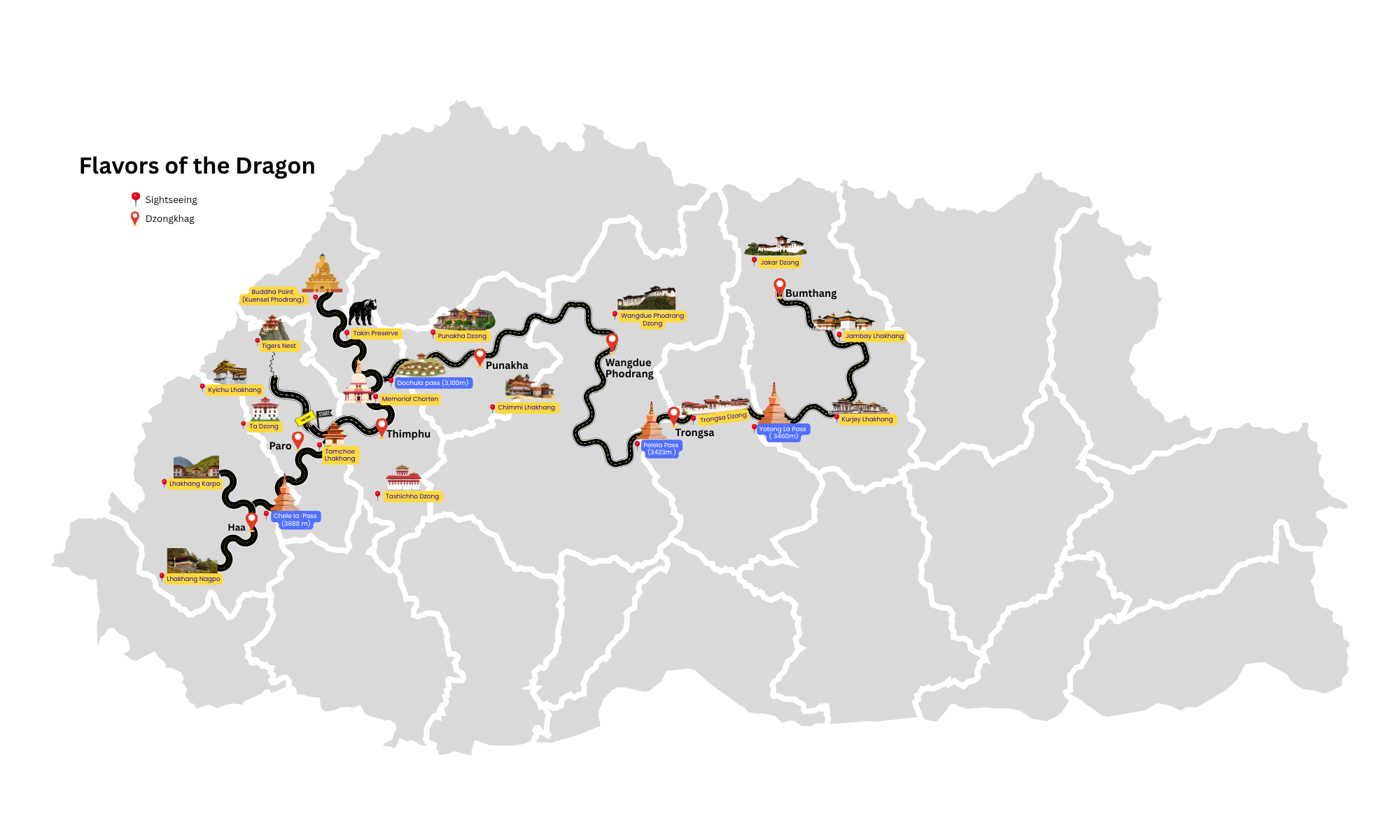
View
Itinerary
Arrive at Paro international airport
- You will land at Paro international Airport, after having experienced one of the most thrilling journeys of your lifetime – the flight to Paro, during which you experience a breath taking view of Mount Everest, Kanchenjunga and other famous Himalayan peaks, including the sacred Jomolhari and Mount Jichu Drake. The landing at Paro, considered one of the most challenging is an enthralling experience.
- At the airport, you will be received by our company’s representatives. We will make a short stop to clear your jet lag for a Bhutanese tea (Suja), which comprises Bhutanese tea leaves, salt and butter. After this, you will begin a sojourn of Paro valley, which includes visits to the National Museum of Bhutan and Paro Rinpong Fortress.
- Lunch will then be served at a local hotel and you can choose Bhutanese delicacies, such as ema datsi (chilly and cheese), beef/yak pa (roasted beef or yak), beef/yak curry, roasted pig or pig curry. Roasted chicken or chicken curry can be served, too. Soup made from boiled bones and added spices, such as coriander is also a delicacy. Paro is Bhutan’s rice bowl and so you can choose between a variety of rice, including red rice, white ones etc. You will be served Bhutanese curd along with the meal.
- After lunch, you will have free time to explore Paro town at your own pace and sample some local delicacies. In the evening, we will visit a traditional farmhouse for dinner, where you can enjoy and help yourself to ara, the locally brewed rice wine.
Paro – Haa
- During breakfast you will be served Bhutanese tea and “desi”, rice with butter, sugar and other ingredients such as cardamom. Another alternative can be “shamday”, rice mixed with minced meat and spices. You can also taste “Thub”, porridge made of rice mixed with pepper. If you do not want hot (spicy) dishes, alterations can be made.

- After breakfast, we begin our journey to Haa and cross Chelela (Pass), Bhutan’s highest road point at an altitude of about 4,000 meters. The flora and fauna of the area will make your drive exciting.
- Haa is famous for its Hoentoe, aromatic buckwheat dumplings stuffed with turnip, greens, datsi (cheese), spin- ach and other ingredients. This is a dish that the people of Haa Valley serve when they celebrate a festival called as Lomba, the region’s New Year. Other than this, you can taste common Bhutanese dishes served with rice, such as pork, chicken, beef, yak and even fish delicacies. Another common dish is “Momo,” dumplings stuffed either with meat or cheese. We will visit regions of importance in Haa, such as the abode of Aap Chundu (protecting deity of the region.) We can feast on the valleys beauty, before retiring for the day.
- Night halt in hotel.
Haa to Thimphu
- After breakfast, begin your scenic drive from Haa to Thimphu through thick pine forests and beautiful mountain landscapes. En route, we will stop for lunch at a restaurant serving Indian cuisine, which is widely enjoyed and popular in Bhutan.

- Upon arrival in Thimphu, we will begin with sightseeing visits including the Memorial Chorten, built in memory of the Third King, Jigme Dorji Wangchuck, and Buddha Point for panoramic views of the Thimphu Valley. In the evening, enjoy the stunning night view of Tashichho Dzong illuminated against the sky. If you wish, we can also visit a local karaoke lounge to experience Thimphu’s light nightlife and enjoy some singing.
- Overnight at a hotel in Thimphu.
Thimphu – Punakha/Wangdue
- Before we head to Punakha today, we will visit some of the iconic locations in Thimphu including the Takin Preserve, the home of National Animal of Bhutan, Paper Factory and the Simply Bhutan. Your journey to Punakha, which is about 3 hours, will then begin. In about 45 minutes, you will reach the Dochula Pass (3,100m), from where visitors on a clear day can have a breathtaking glimpse of the eastern Himalayan range that consists of snow-capped peaks with elevations ranging from 6000m to 7554m.

- Apart from this, the 108 stupas (chortens) at Dochula pass add to the beauty of the pass. The Pass is also exotic in flora and fauna. Before reaching Punakha/Wangdue, you will encounter several stalls on the way selling vegetables and Wang- duephodrang district’s specialty, locally called as “Maykhu”. This resembles a pancake and is made from beaten rice.
- Punakha was Bhutan’s capital until 1955 and is still home of the Chief Abbot during the winter months.
- Punakha Dzong (Fortress), built in 1637 by Shabdrung Ngawang Namgyal, stands like a giant ship on an ocean from afar. Build at the confluence of two rivers, Pho Chhu (male river) and Mo Chhu (female river). The Dzong is an epitome of Bhutanese architecture.
- Night halt will be at a hotel in Punakha
Punakha – Bumthang
- After an early breakfast, we travel east crossing Pepela (Pass), traditionally the boundary between eastern and western Bhutan. We will stop for lunch at Chendebji, where a stupa resembling the one in Kathmandu stands. In what will be a buffet lunch, you will be served all dishes common in Bhutan, including the “Goep”(Tripe). Like most other meat dishes, it is cooked with plenty of spices, including chilies.
- En-route, we will visit Trongsa Dzong, one of Bhutan’s most historical fortresses, from where the unification of Bhutan surfaced. We will also visit the Ta Dzong, formerly a watch tower.

- Upon arrival at Bumthang, we will move into a hotel and proceed for dinner.
- Bumthang is Bhutan’s premier producer of buckwheat and thus, the district has a couple of special dishes made from buckwheat. The most famous include, “Puta”, which is served in the form of noodles. Curd is usually served with the dish.
- Another specialty is “Khuli”, Buckwheat pancakes, which is often served as an alternative to rice, along with ema-datsi.
- During dinner, you can have a taste of these dishes.
Bumthang halt
- Just as rice was and still is the staple food of western Bhutan, maize is associated with eastern Bhutan. Most families of eastern Bhutan dry corn kernels in bamboo shoots and then ground it coarsely to make ‘Kharang’, which is mixed with rice and served with curry. Kharang is a dish that is recom- mended for diabetic patients.
- A derivative of “Kharang” is “Kharang Bokpi,” flour that is produced during the making of “Kharang.” From Kharang Bokpi, one can prepare a special porridge called as “Yomri.” This is served especially as breakfast and as a dish for the sick who cannot take in solid food. One can also mix rice with the dish.
- You can try this dish during breakfast.
- After breakfast you can explore Bumthang valley, a blend of the abstract and concrete with innumerable legends surrounding the area.
- You will be visiting Kurje Lhakhang where the Great Indian Saint Guru Padsambhava subdued a local demon and left his body imprint on a rock. The other is Jamphel lhakhang, which was built in the 7th century by Songsten Goembo, the Tibetan Buddhist King. Jakar Dzong (the fortress of white bird) built in the 17th century by Tenzin Rabgay (the fourth Desi) is another famous landmark.
- You will also be visiting, Tamshing lhakhang built in 1501 by Terton Pema Lingpa (the founder of religious treasures). Kunchosum lhakhang and Membertsho (the flaming lake) are other places. Legend has it that Pema Lingpa discovered several religious text from the lake.
- Lunch will be served in a local restaurant, where you will find other special dishes of the east. One is the “Bokpi,” flour smashed and then cooked and fried for a few minutes. Based on the ingredient, you can have “Kharang Bokpi”, a corn derivative; “Khu Bokpi”, rice derivate and those made from buckwheat and even wheat. These are served as alternatives to rice, along with curry.
- Another dish is the “Bathu,” a semi-porridge consisting of small flour dumplings mixed and cooked in water consisting of bones. The flavor coming out of the bones make this disk special. Spices are also mixed and this dish is served especially when the weather is cold. It warms up the body.
- During lunch, you can try out these dishes, too.
- After lunch visit the cheese factory and take a stroll of Bumthang town.
Bumthang – Punakha
- After breakfast, begin your scenic drive from Bumthang to Punakha (approximately 6 hours). The journey takes you across mountain passes and through lush valleys, offering beautiful views of forests, rivers, and traditional villages along the way. Upon arrival in Punakha, check in to your hotel and relax for the evening.
- Overnight in Punakha.
Punakha- Paro
- After breakfast, visit Chimi Lhakhang, the famous fertility temple dedicated to the Divine Mad Monk, Drukpa Kuenley. Later, take a short walk across the Punakha Suspension Bridge, one of the longest in Bhutan, offering scenic views of the river and surrounding valley. The order of the actitvies cab be arranged based on the location of the accommodation. After the visits, drive to Paro, we will try Malaysian Dishes today at Asian Fusion Flavour and check in to your hotel for the night.
- Overnight in Paro.
Tigers Nest Climb
After an early breakfast, embark on the hike to the iconic Tiger’s Nest Monastery (Taktsang), perched dramatically on a cliff 900 meters above the valley floor. The hike takes approximately 4–5 hours round trip and rewards you with breathtaking views and a deeply spiritual atmosphere. After descending we will have our lunch as Thai Dish & return to your hotel for a well-deserved rest.
Overnight in Paro.
Departure
After breakfast, drive to Paro International Airport for your onward flight, carrying wonderful memories of your Bhutan journey.
Tashi delek! That’s if for your Bhutanese Culinary Adventure!
Cost Details
Cost includes
- Accommodation
- Full Board Meals
- English speaking Guide
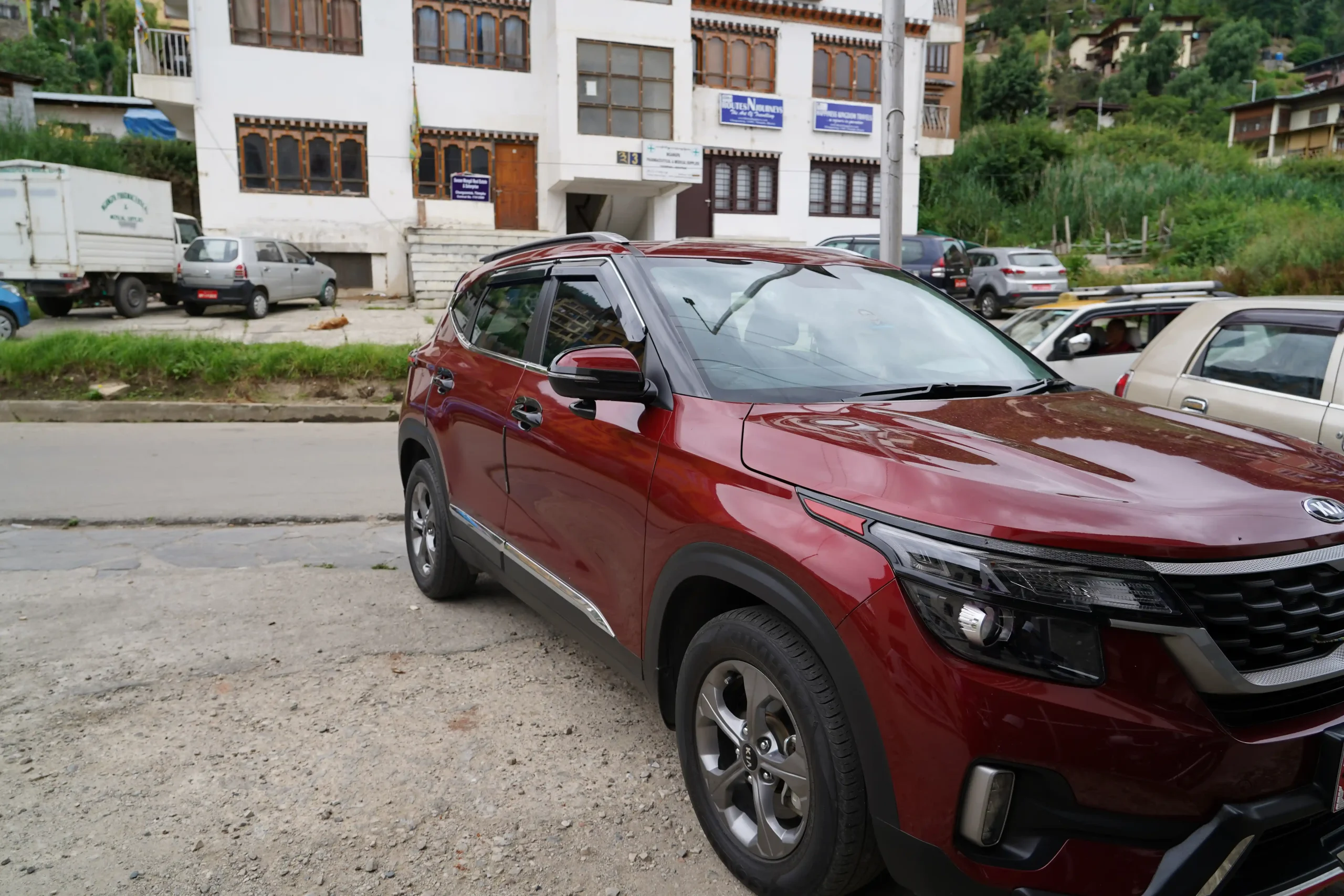
- Transportation
- Entrance fee, Visa fee
- Unlimited bottles of mineral water
- Applicable government taxes(5%GST)
- SDF
- Trying out of traditional Bhutan attire.
Cost exclusion
- Medical & personal insurance
- Personal expenses
- Emergency evacuation charges
- Tips for the guide and driver
- Airfare
- Pony Ride to Taktshang (Tiger Nest)
- Hot Stone Bath
- Raffting


Ask our
travel expert
to start
planning your
tailor-made holiday
Connect With Our Experts or Arrange a Video Appointment For Ideas & Advice.

Trip gallery

View

View
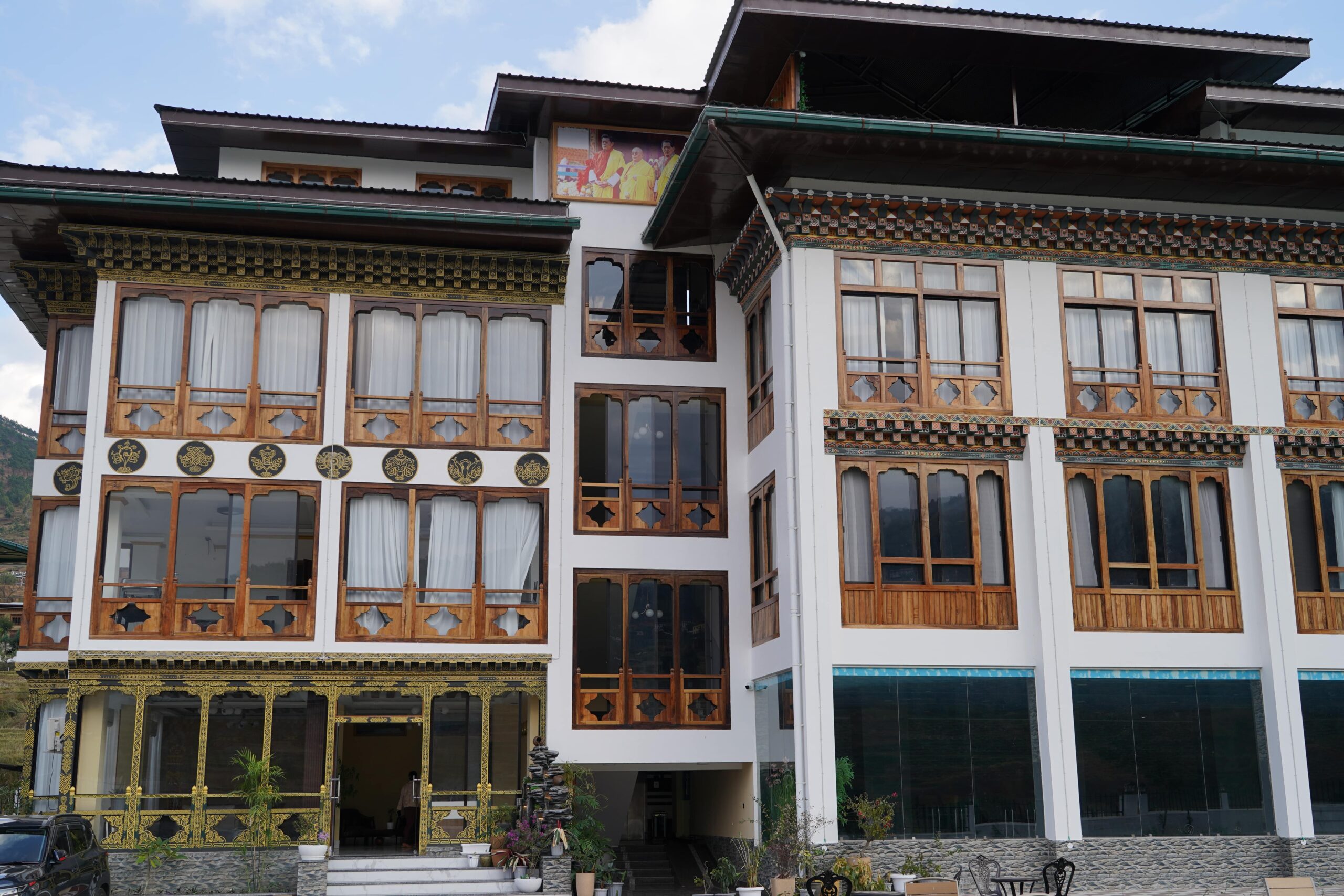
Hotels/Accommodations
Our Bhutan tour packages are specifically curated with the travellers in mind. As a reputable Bhutan travel agency, for the past 23 years, our tour guides and travel specialists have dedicatedly served travellers from all over the world. We want to show you what Bhutan has to offer, and we’re committed to making your trip to Bhutan a special and memorable one. We have a deep love for the Kingdom, and we hope that you’ll come to love it too.


Transportation
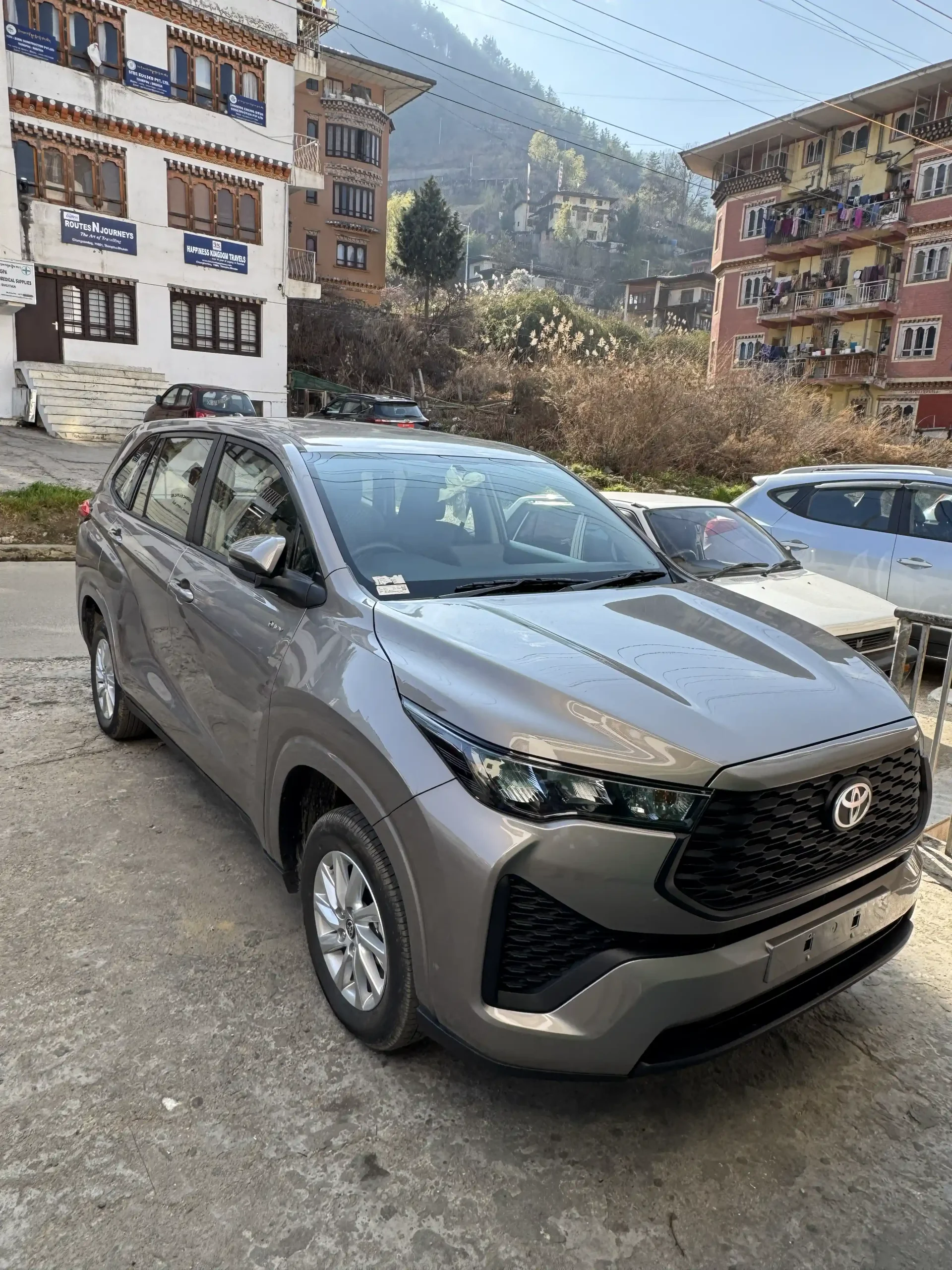
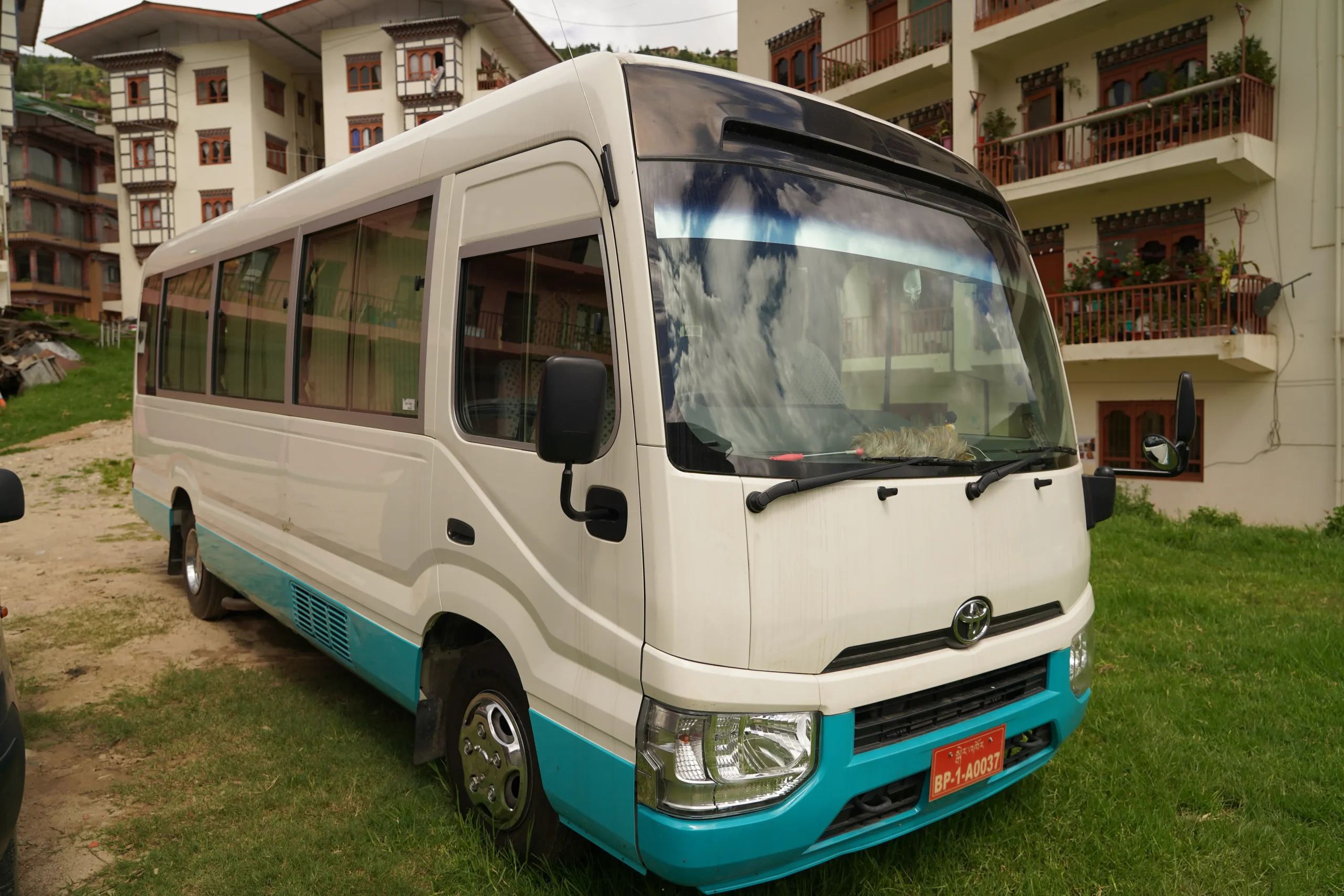
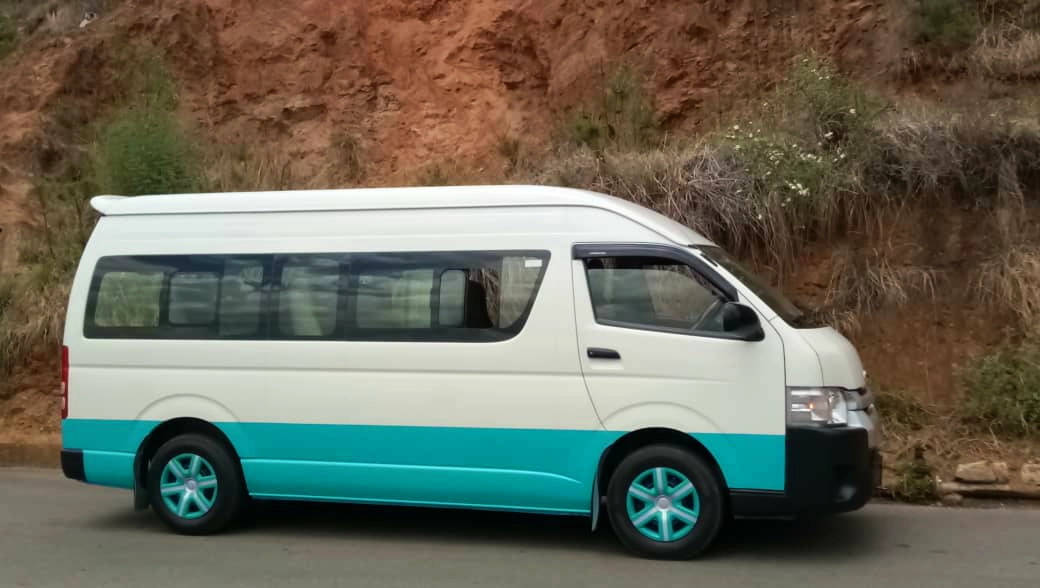
Restaurants
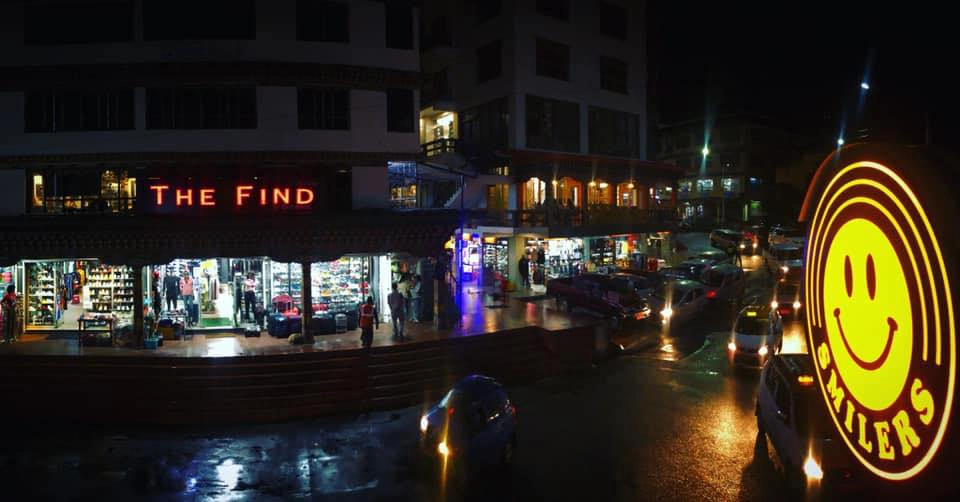











Related trips


