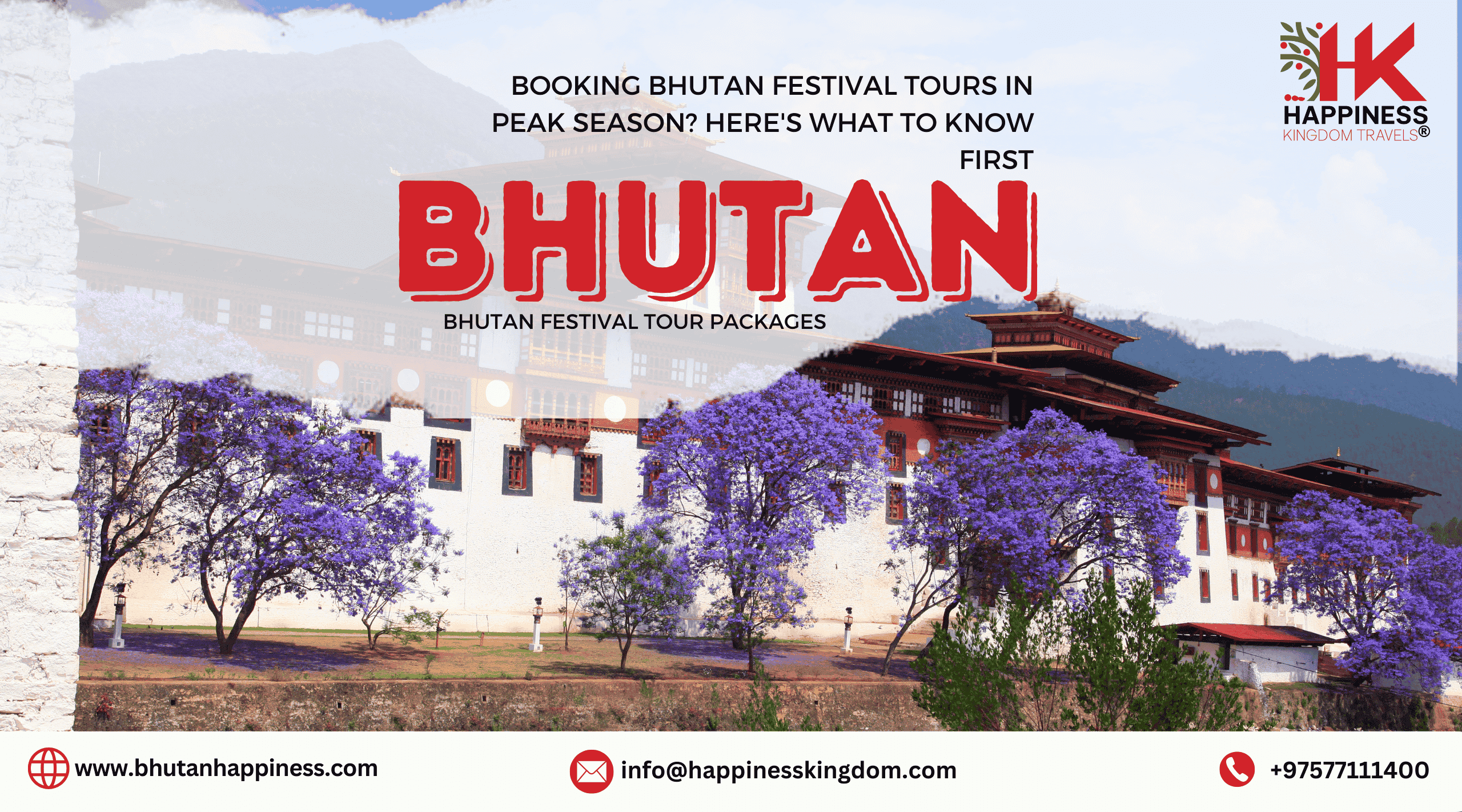
Booking Bhutan Festival Tours in Peak Season? Here’s What to Know First

Are you considering scheduling your next trip to Bhutan during a festival? Or are you in doubt if the peak season is still worth the effort?

Short answer: yes, if you planned correctly. The Bhutanese festival is the time when the country is at its best. But, it is also the time when the tickets, documents, and accommodation are taken up the fastest. That’s why it is essential to select the top Bhutan tour operators and travel agencies.

Before traveling, here is what you should know before booking, especially if they are exploring curated Bhutan festival tour packages through reputable professionals.

Why festival season so special?

Tshechus such as Paro and Thimphu are not merely “shows” for the tourists. They are authentic religious events. Monks and lay dancers perform in masks. The people’s participation is seen through their beautiful kira and gho. Whole valleys congregate in the dzong courtyard to receive blessings, meet friends and relatives, and participate in the celebrations.

If you have already visited monasteries and viewpoints during your previous trip, festivals will surely make the experience much better. You witness the integration of faith, family, and tradition in one place. This is the reason why top Bhutan tour operators emphasize arranging your dates with at least one major tshechu and a few smaller local rituals.

Peak season reality: spring and autumn

The best seasons for festival trips are spring (March-May) and autumn (September-November). The visitors are rewarded with:

  • Clear skies and beautiful mountain views like in a postcard
  • Pleasant daytime temperatures
  • The most important tshechus in Paro, Thimphu, Punakha, and other valleys

However, the flip side is demand. Paro flights are fully booked very early. Excellent boutique hotels in Thimphu, Paro, and Punakha are crowded. The number of tourists inside the dzongs for the festivals will be limited. Collaborating with the best Bhutan tour operators early will let you have the best dates, the best rooms, and a more relaxed experience.

Understanding SDF, visas, and permits

While you’re comparing Bhutan festival tours packages, the following things should be taken into consideration:

  • Sustainable Development Fee (SDF) – Your daily donation towards health care, education, and conservation in Bhutan.
  • Visa or entry permits – A Visa is a must for international travelers, and it must be arranged through a local partner. Indian travelers are allowed to obtain a permit and SDF even when they come in by road.
  • Internal permits – Some valleys past Paro and Thimphu require special travel permits.

Trusted top Bhutan tour operators include these in your itinerary. They take care of forms, queues, and approvals while you concentrate on dates and experiences, not paperwork.

Choosing the right festival itinerary

Each festival has its own distinct character. Some are impressive and full of people, while others are rather simple and personal. A good festival itinerary is patient enough to cover the following points:

  • One important tshechu, such as Paro or Thimphu
  • One less crowded regional festival if dates are convenient
  • Hiking to Tiger’s Nest temple
  • Visiting dzongs in Punakha, Trongsa, or other valleys
  • Participating in village walks or hot stone baths between festival days

Several festival tour packages also provide a “buffer day” surrounding big festival dates. This safeguards you from flight delays and grants you time to regenerate before or after the days in the dzong courtyard.

What a good operator quietly handles for you

During festival time, there are some less visible but greatly sensed aspects, which are:

  • Early presence at the dzongs to have good positions.
  • Recommendations regarding clothing according to climate and decorum.
  • Pre-packed lunch or break scheduled, so you do not have to wait in the long queue for food.
  • Collaboration with drivers to be ready for road closures or security checks.
  • Changing the schedule to avoid the flow of the peak crowd.

This is the area where the best Bhutan tour operators show their superiority. How smoothly your day flows depends on the logistics behind the scenes.

Practical booking tips for peak season

To ensure a smooth and enjoyable festival trip:

  • Plan your trip early – Six to nine months ahead is the best time for premium dates and hotels.
  • Be flexible for a day or two – Even changing your arrival by a day might grant you access to better flights and accommodations.
  • Verify the hotel category – The festival period is when the difference between basic and curated stays is most felt.
  • Dress for the different temperatures – Mornings are cold, afternoons are warm and breezy, evenings are. So, always carry light layers, a windproof jacket, and comfortable shoes.

While evaluating Bhutan festival tours packages, look beyond price. Consider inclusions, guide experience, type of car, and the number of days allotted for festivals versus sightseeing.

Festival etiquette that keeps things smooth

You are entering an active sacred place of worship, so the following are the basic manners that matter

  • Dress in a modest way that covers your shoulders and knees.
  • Take off hats and sunglasses in temple courtyards.
  • Move around stupas and prayer wheels in a clockwise direction.
  • Always inquire first before taking close-up photos of people, especially monks and old people.
  • Respect your guide’s directions concerning the forbidden areas.

Respect is the key that unlocks the door. The locals are friendly and ready to communicate when they perceive their territory is respected.

Is a festival tour right for you?

A peak season festival trip is ideal if you:

  • Have visited Bhutan before and want to go deeper this time.
  • Are passionate about photography and watching people.
  • Prefer slow cultural travel over packed sightseeing.
  • Are ok with early mornings and long days when something extraordinary is taking place.

If this sounds like you, a festival-focused itinerary will be more satisfying than a regular circuit.

In Summary

Bhutan’s celebration is a mix of color, drums, incense, and mountain air. By planning correctly, you will feel the energy of the festival right from within and not just from the outskirts of the crowd.

If you like to make your next trip a festival-centred one, Happiness Kingdom Travels will create a package that fits your dates, comfort level, and curiosity perfectly.

Take advantage of our top Bhutan tour operators to explore Bhutan and find the best tour packages. With our assistance, you’ll get a privileged view of the most joyful celebrations of the kingdom without losing the calm that brought you there in the first place.
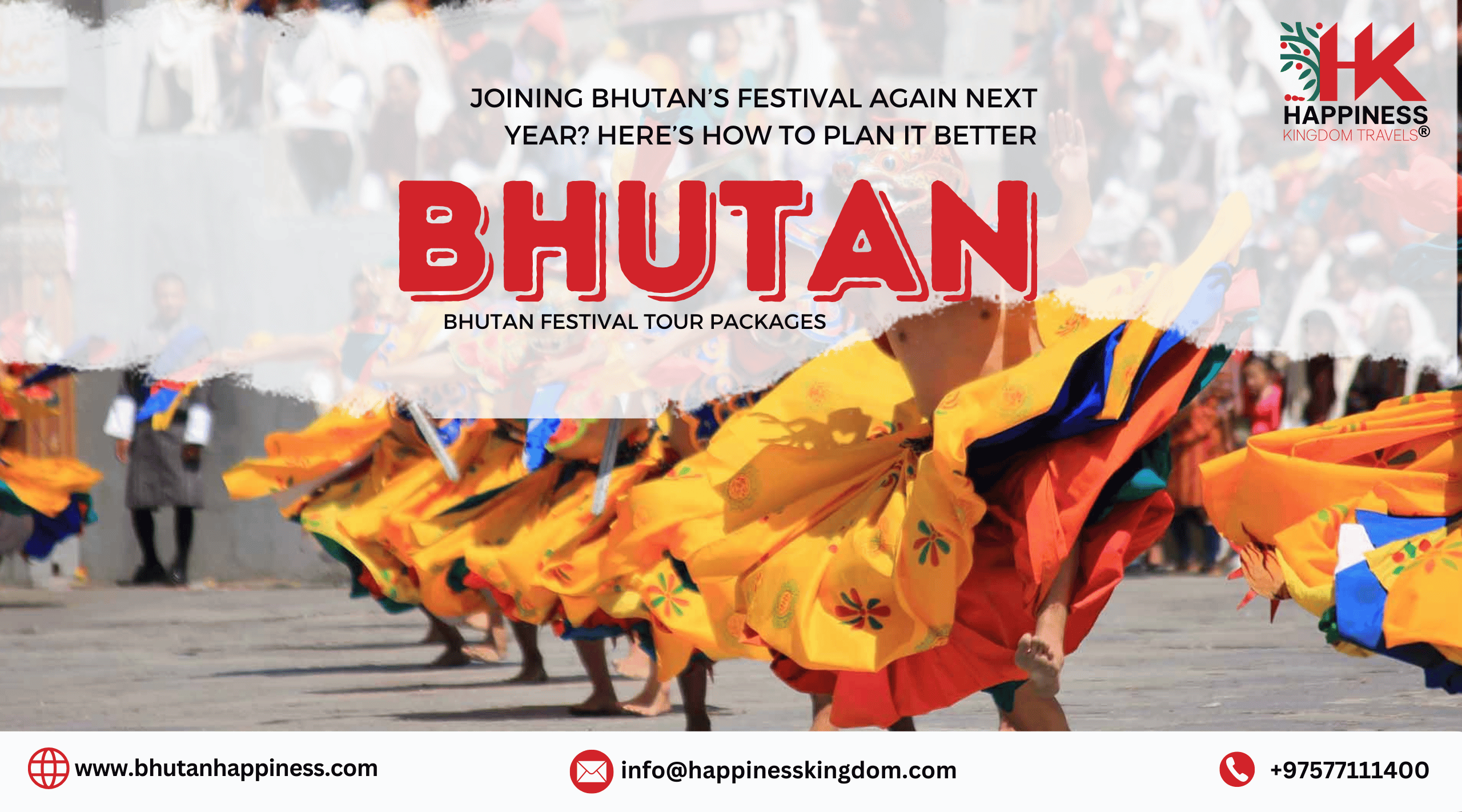
Joining Bhutan’s Festival Again Next Year? Here’s How to Plan It Better

If you’ve already attended a Bhutan festival once, you know how special it is. The energy, the colors, the chants, the masked dances, the deep spiritual atmosphere—there’s nothing quite like a Bhutanese Tshechu. And if you’re considering joining one again next year, you’re in for a treat.

What many people don’t realize is that each Bhutan festival has its own unique story, energy, and local flavor. Even if you attend the same festival in a different year, you’ll notice new performances, new blessings, and new cultural experiences. Bhutan festivals are always evolving, yet rooted in timeless traditions.

So if you’re planning a return trip, let’s make it smarter, smoother, and even more meaningful this time.

At Happiness Kingdom Travels, we specialize in personalized and immersive Bhutan festival tours packages for U.S. travelers—and here’s your guide to planning a truly unforgettable second visit.

1. What Makes Bhutan’s Festivals Worth Repeating

You might wonder—why attend again if you’ve already been once?
Here’s why:

✔ Every region celebrates Tshechu differently

Even if you attended Paro Tshechu, the Thimphu or Bumthang Tshechu will feel completely new.

✔ The energy changes each year

Different dance performers, new blessings, fresher story interpretations.

✔ You understand more the second time

Your familiarity with the rituals makes the experience deeper and more emotional.

✔ More opportunities for photography

Over 60% of returning festival travelers say they capture better photos on their second trip because they know what to expect.

✔ You can add new destinations or treks this time

Festival + short trek = the perfect cultural adventure.

2. Which Bhutan Festival Should You Choose Next Year?

Bhutan hosts dozens of Tshechu festivals annually. Here are some favorites for returning travelers:

⭐ Paro Tshechu (March/April)

Famous for its vibrant dances and the unveiling of the giant Thangka painting at dawn.

⭐ Thimphu Tshechu (September)

A large-scale festival in the capital—great for first-timers and repeat travelers.

⭐ Jambay Lhakhang Drup (October/November)

Known for the sacred fire blessing and the rare naked dance performed at midnight.

⭐ Haa Summer Festival (July)

A cultural celebration of nomadic life—perfect for travelers seeking offbeat authentic experiences.

⭐ Black-Necked Crane Festival (November)

Blend culture with conservation at this heartwarming celebration in Phobjikha Valley.

👉 We can help you choose based on your interests—spirituality, photography, nature, or culture.

3. Plan Earlier This Time: Why It Matters

Festival season is the busiest time to visit Bhutan. If you want a smoother, more comfortable experience, planning early is key.

📌 Book 6–9 months in advance for:

  • Better flight options
  • Best hotel rooms (festival locations fill up fast!)
  • Front-row access to mask dances
  • Ideal photography viewpoints
  • Custom itineraries that avoid crowds

📊 Travel Insight:

Over 72% of festival travelers reported a more enjoyable experience when they booked in advance.

4. Optimize Your Itinerary Beyond the Festival

Your festival trip can be so much more than just attending the main event. For your second trip, consider adding:

✔ A short trek

  • Druk Path Trek
  • Gangtey Nature Trail
  • Bumthang Owl Trek

Ideal for combining culture + nature.

✔ Homestay or farmhouse experiences

Learn cooking, try hot stone baths, or chat with Bhutanese families.

✔ Cultural workshops

  • Thangka painting
  • Archery lessons
  • Traditional weaving

✔ Offbeat monastery visits

Perfect for quiet reflection away from festival crowds.

5. Tips to Improve Your Festival Experience This Time

You already know the basics. Here’s how to enjoy it even more:

➤ Arrive a day or two early

Helps with acclimatization and lets you rest before the big days.

➤ Wear Bhutanese traditional clothing

A Kira or Gho enhances your experience—and locals love it!

➤ Learn the meaning of dances

We provide a festival guide explaining every mask dance, ritual, and symbolism.

➤ Use a telephoto lens for photos

If you love photography, this changes everything.

➤ Attend the festival’s “most sacred day”

Large Tshechus have one day with special blessings—don’t miss it.

6. Pack Smarter for Festival Travel

Festival days can be long and sunny, so bring:

  • Light layers
  • Comfortable walking shoes
  • Sunscreen + sunglasses
  • A camera with extra battery
  • Snacks + water bottle
  • A light shawl for temple visits

📌 Pro Tip: Weather varies by altitude—Bhutan can be cold in the morning and warm in the afternoon.

7. Why Booking with a Licensed Bhutan Tour Operator Matters

When you’re coming back for a second visit, working with a local operator makes a huge difference.

At Happiness Kingdom Travels, we provide:

✔ Priority festival seating

✔ Custom festival-focused itineraries

✔ Cultural interpretation and guided insights

✔ Visa & permit processing

✔ Hotel & transportation coordination

✔ Festival photography guidance

✔ Comfortable travel for families and groups

And best of all—your experience becomes richer, smoother, and deeply personal.

8. Traveling from the USA: What to Know

  • The most popular routes from the USA: via BangkokDelhi, or Kathmandu
  • Book international flights early (festival weeks sell out faster)
  • U.S. citizens need:
    • A Bhutan visa (handled by us)
    • Passport valid for 6+ months
    • Travel insurance recommended
  • Sustainable Development Fee (SDF) applies—your package includes it

Final Thoughts

Joining a Bhutan festival again next year is an amazing idea—and with the right planning, your second experience can feel even more magical and immersive than the first. Whether you want a deeper cultural journey, better photo opportunities, or a more relaxed trip, early planning and curated Bhutan festival tours packages make all the difference.

At Happiness Kingdom Travels, we’re here to make your next Bhutan festival trip your most memorable yet.

👉 Ready to start planning next year’s festival journey? Contact us today!

FAQ

Q1: How far in advance should I book Bhutan festival tour packages?

Ideally 6–9 months in advance, especially for Paro or Thimphu Tshechu.

Q2: Can I attend multiple festivals in one trip?

Yes! Many festivals occur close together. We can plan a two-festival itinerary.

Q3: Are Bhutan festivals suitable for kids or seniors?

Absolutely. With proper seating and pacing, they’re enjoyable for all ages.

Q4: Can I combine trekking with festival tours?

Yes—festival + trek is one of the most popular choices for returning travelers.

Q5: Are festival dates fixed?

Dates follow the lunar calendar and shift annually—ask us for updated schedules.

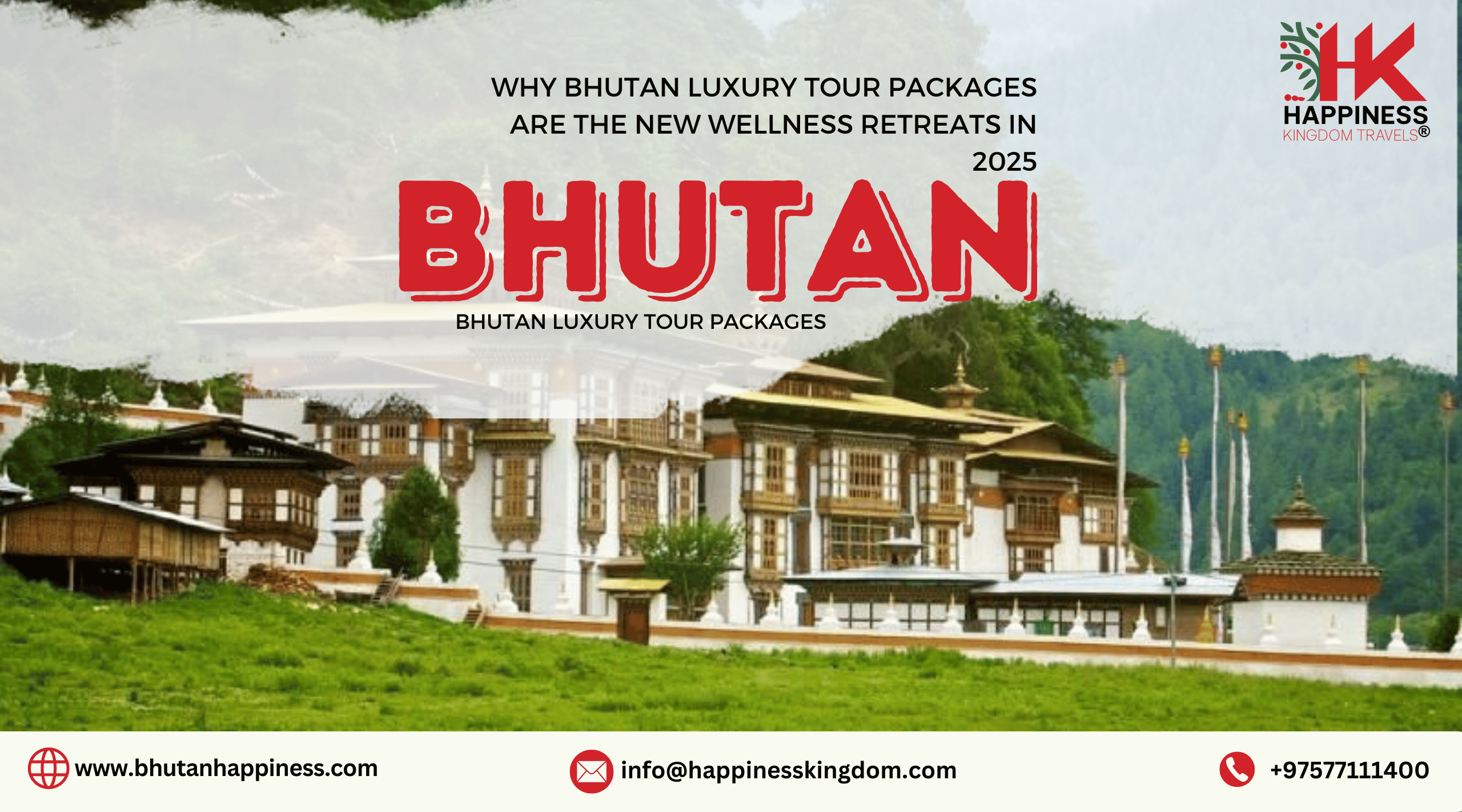
Why Bhutan Luxury Tour Packages Are the New Wellness Retreats in 2025

In a society that is completely dependent on screens, lightning-fast movement, and stress, travelers are in search of the unique experiences that heal, inspire, and slow down time. And, Bhutan is turning into the most sought-after wellness travel destination around the globe. More than just adventures or sightseeing, Bhutan Luxury Tour Packages provide a very profound experience. It offers spiritual renewal, natural purity, cultural immersion, and mindful luxury.

Bhutan is a destination where you do not just go to “see”; it is a destination where you go to “feel”.

This article will explain how the Bhutan luxury tour will create a sanctuary for travelers who crave quiet luxury, emotional rejuvenation, and soulful exploration.

Why Luxury Travel in Bhutan Is Redefining Wellness Tourism

Bhutan has earned the nickname of the last Shangri-La. However, the actual enchantment of the place is how it transforms travelers, not by means of luxury, but by “experiences.” Modern tourists do not want to visit crowded places anymore; they are looking for peace of mind, culture, and meaningful travel.

Let us show you what is redefining Bhutan as the world’s ultimate wellness luxury destination:

1. Spiritual Detox in Nature, Not in Resorts

Imagine meditating at ancient monasteries such as Tiger’s Nest, where you are enveloped by clouds rather than walls. Or practicing mindfulness with monks, hiking the pine forests, and the prayer flags fluttering in the wind.

Bhutan does not create wellness; it is wellness. No spa can ever compete with the healing atmosphere of mountains, monasteries, valleys, and villages combined.

2. High-End Luxury with Zero Environmental Impact

In Bhutan, luxury goes hand in hand with low-impact tourism. That means the tourists are fewer, but the experiences are richer. It gets the peace, privacy, and personalized comfort.

The top-end resorts such as Six Senses, Aman resorts, and COMO Uma offer secluded villas, balconies with forest views, spa rituals, hot-stone baths with herbs, and ancient Bhutanese therapies. All these things are made to revitalize your mind and body.

The importance of this luxury lies in three factors:

✔ Eco-friendly wellness

✔ Authentic Bhutanese hospitality

✔ Total cultural immersion

Discover the best Bhutan luxury tour packages to enjoy the luxury you have been looking for.

3. Cultural Luxury — Where Tradition Feels Like a Gift

Culture in Bhutan is not staged but is experienced every day. The luxury tour packages include:

  • Private visits to monasteries where monks are present
  • Thangka painting and pottery making classes
  • Traditional hot-stone baths and herbal healing sessions
  • Indoor archery sessions, which are Bhutan’s national sport
  • Private viewing of festivals during Paro and Thimphu Tshechu

The tourists become not only the viewers of culture but an actual part of it.

4. Exclusive Experiences, Not Crowded Sightseeing

Unlike mass-tourism hotspots, Bhutan offers exclusivity in luxury through the unique access it grants:

  • Helicopter rides over the Himalayan peaks
  • Sunrise meditation at Tiger’s Nest
  • Paro Valley champagne breakfast
  • Monks or local families’ private dining
  • Individual spiritual blessings in temples

Every minute of your stay is filled with the narration of the story you want to tell forever.

5. Holistic Luxury — Mind, Body, and Soul Travel

Bhutan Luxury Tour Packages are distinct because they are capable of merging:

✔ Mindful Travel (yoga, meditation, digital detox)

✔ Adventure Travel (treks, rafting, walking trails)

✔ Cultural Travel (rituals, festivals, village stays)

✔ Wellness Travel (spa, hot stone therapy, traditional healing)

This balance allows Bhutan to be among the very few places on earth where luxury connects one to it.

Final Thought

Nowadays, luxury means a matter of experience, calmness, transformation, and exclusivity. Through the mediums of silence, spirituality, and nature, Bhutan is the place where all of this can be had effortlessly.

If you want to book your Luxury Tour Package 2025, you have come to the right place.

Let Bhutan heal your soul, inspire you, and welcome you into its arms.

Happiness Kingdom Travels invites you to experience a divine, luxurious vacation. Our personalized package will take care of your needs during the trip.

📩 Start your journey to awe by booking our Bhutan Luxury Tour Packages today.

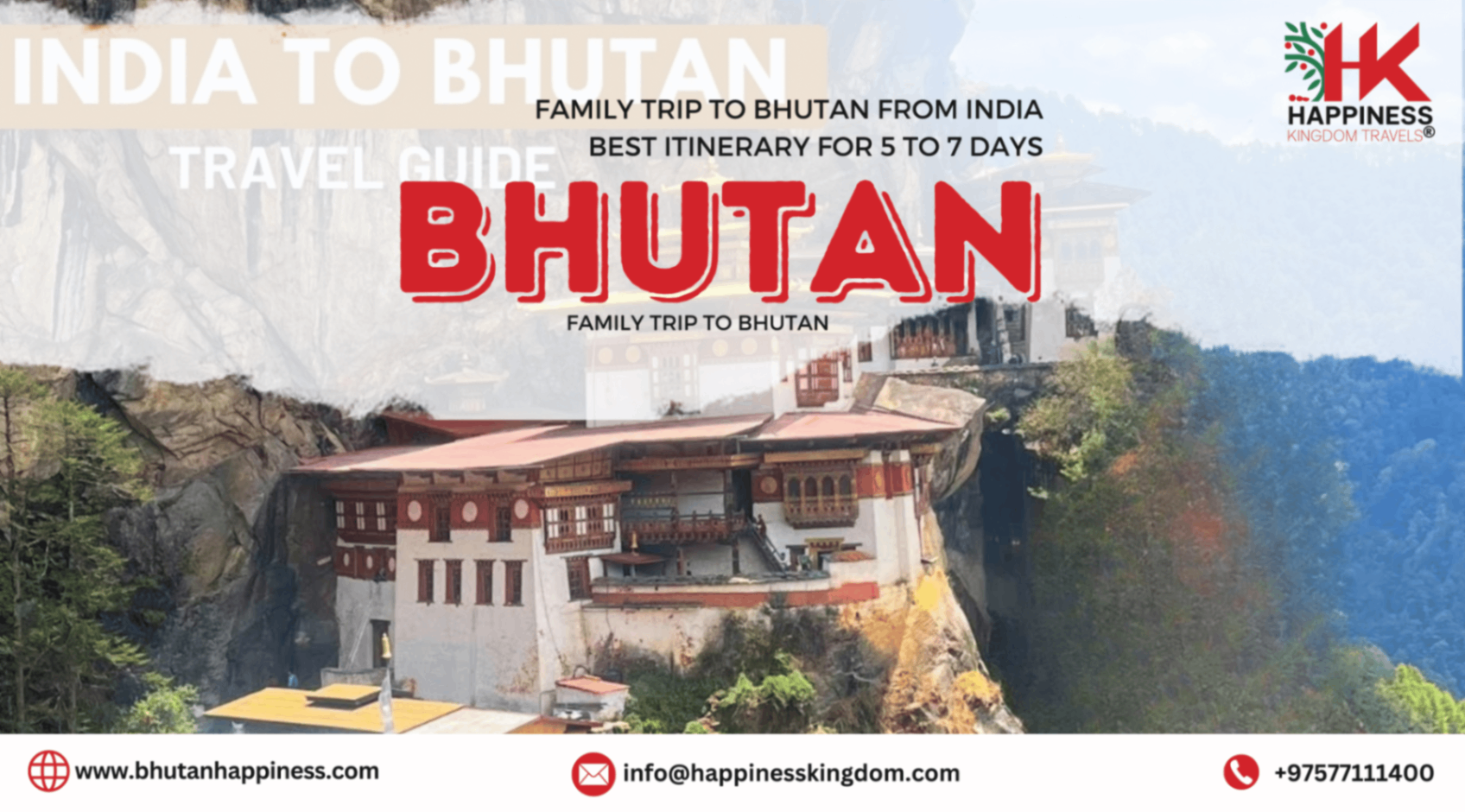
Family Trip to Bhutan from India Best Itinerary for 5 to 7 Days

If you’re in India or already visiting India and want to add something peaceful, scenic, and soul-enriching to your itinerary, Bhutan is the perfect next stop—especially for families.

Imagine your kids walking alongside monks at centuries-old monasteries. Picture grandparents sipping butter tea while gazing out at Himalayan peaks. Whether you’re a U.S. citizen planning a family extension from India or coordinating a Bhutan trip for family in India, we’ve got the perfect 5 to 7-day itinerary to help you make the most of your time.

At Happiness Kingdom Travels, we specialize in stress-free, family-friendly travel experiences—and Bhutan is one of our favorite destinations for all ages.

Why Choose Bhutan for a Family Trip?

Bhutan is safe, clean, and uncrowded, making it ideal for families of all ages. The crime rate is low, the people are warm and welcoming, and the environment is pristine. Plus, the culture is incredibly respectful—your family will feel right at home.

🧘‍♀️ Quick stat: According to the Tourism Council of Bhutan, over 65% of international travelers visiting Bhutan in 2023 rated it as a “peaceful and spiritually rewarding” destination—perfect for family bonding.

How to Travel to Bhutan from India

There are two main ways to enter Bhutan from India:

✈️ By Air (Most convenient for U.S. travelers)

  • Fly from major Indian cities like DelhiKolkata, or Bagdogra to Paro International Airport

  • Flights are available through Druk Air or Bhutan Airlines

  • Most U.S. families already in India choose this option due to convenience

🚗 By Road (Good for Indian family members)

  • Entry via Phuentsholing, near the West Bengal border

  • Ideal for families based in Northeast India or those seeking a scenic drive

📌 Visa Note:

  • U.S. passport holders must book through a licensed Bhutan tour operator and require a visa

  • Indian citizens do not need a visa, but need an entry permit (we handle both)

Best Time to Visit Bhutan with Family

The most comfortable months are:

🌸 Spring (March–May): Clear skies, blooming valleys, great for light treks
🍂 Fall (September–November): Festival season, cool weather, scenic drives
☀️ Summer (June–August): Greenery galore but expect some monsoon showers
❄️ Winter (December–February): Quiet and magical, but colder

5-Day Family-Friendly Bhutan Itinerary (Short & Scenic)

Day 1 – Arrive in Paro

  • Warm welcome by our team

  • Check-in to your hotel

  • Explore Paro town and enjoy Bhutanese dinner

Day 2 – Paro Sightseeing

  • Visit the National Museum and Rinpung Dzong

  • Dress up in traditional Bhutanese outfits (great for family photos)

  • Kids can try archery in the afternoon

Day 3 – Hike to Tiger’s Nest (Optional for Kids/Elders)

  • Hike to Taktsang Monastery (Tiger’s Nest)—optional horse ride for kids

  • Or visit a local farmhouse and enjoy cultural activities

  • Evening free for relaxation

Day 4 – Day Trip to Chele La Pass

  • Scenic mountain drive with picnic

  • Visit local handicraft shops and have a quiet family dinner

Day 5 – Departure

  • Final shopping and goodbyes

  • Transfer to Paro Airport

7-Day Bhutan Itinerary for Families (Cultural + Nature Combo)

Day 1 – Arrive in Paro → Transfer to Thimphu

  • Drive to Bhutan’s capital

  • Visit Buddha Dordenma and Memorial Chorten

Day 2 – Explore Thimphu

  • Royal Takin Preserve, Folk Heritage Museum

  • Weekend Market or Traditional Painting School

Day 3 – Drive to Punakha (via Dochula Pass)

  • Stunning 108 stupas at Dochula

  • Easy hike to Chimi Lhakhang (Fertility Temple)

Day 4 – Punakha Sightseeing

  • Punakha Dzong and longest suspension bridge

  • Family-friendly rafting (optional)

Day 5 – Return to Paro

  • Stop at local villages along the way

  • Traditional dinner with cultural show

Day 6 – Tiger’s Nest OR Cultural Activity Day

  • Flexible plan depending on family’s energy

  • Alternate: farmhouse cooking class, arts and crafts

Day 7 – Departure

  • We’ll drop you off at Paro Airport with plenty of smiles

Kid-Friendly & Senior-Friendly Activities

  • Archery lessons
  • Storytelling sessions at monasteries
  • Bhutanese cooking demos
  • Festival dress-up for family photos
  • Arts and crafts workshops for kids

Where to Stay: Family-Friendly Hotels

We recommend:

  • Tenzinling Resort (Paro) – Family suites, open lawns

  • City Hotel (Thimphu) – Central and cozy

  • Zhingkham Resort (Punakha) – Valley views and peaceful vibes

All our suggested hotels include:

  • Extra beds or connecting rooms

  • Special meals for kids

  • Easy access to sightseeing

What to Pack for a Bhutan Family Trip

  • 🧥 Layers – temperature varies by altitude
  •  Comfy walking shoes
  • Daypacks for hikes
  •  Hats, sunscreen, and water bottles
  • Small toys or games for downtime

Why Book Your Family Bhutan Trip with Us?

At Happiness Kingdom Travels, we:

  • Handle visas, permits, hotels, meals, and all logistics
  • Customize itineraries for kids, parents, and grandparents
  • Offer English-speaking guides trained in family travel
  • Have on-ground support 24/7 throughout your trip

📈 Fun Fact: 92% of our family travel clients say Bhutan was the most memorable part of their multi-country vacation.

🙋‍♀️ FAQ – Family Trip to Bhutan from India

Q1. Is Bhutan safe for families?
Yes, it’s one of the safest countries in Asia with a very low crime rate.

Q2. Can young kids hike to Tiger’s Nest?
Yes, kids aged 6+ can often hike or ride a pony. For toddlers, we offer alternative cultural tours.

Q3. Is there food for picky eaters?
Absolutely. We cater to special diets, and many hotels offer both Bhutanese and Western options.

Q4. How early should I book?
At least 2–3 months in advance, especially during spring or fall festivals.

Final Thoughts

Whether you’re a U.S. traveler visiting family in India or planning a dual-destination adventure, a family trip to Bhutan from India is one of the most peaceful, enriching, and memorable vacations you can take.

And when you book with Happiness Kingdom Travels, every detail is taken care of—so you can focus on what matters: quality time, stunning views, and cultural connection.

👉 Let’s start planning your family’s Bhutan story. Contact us today!

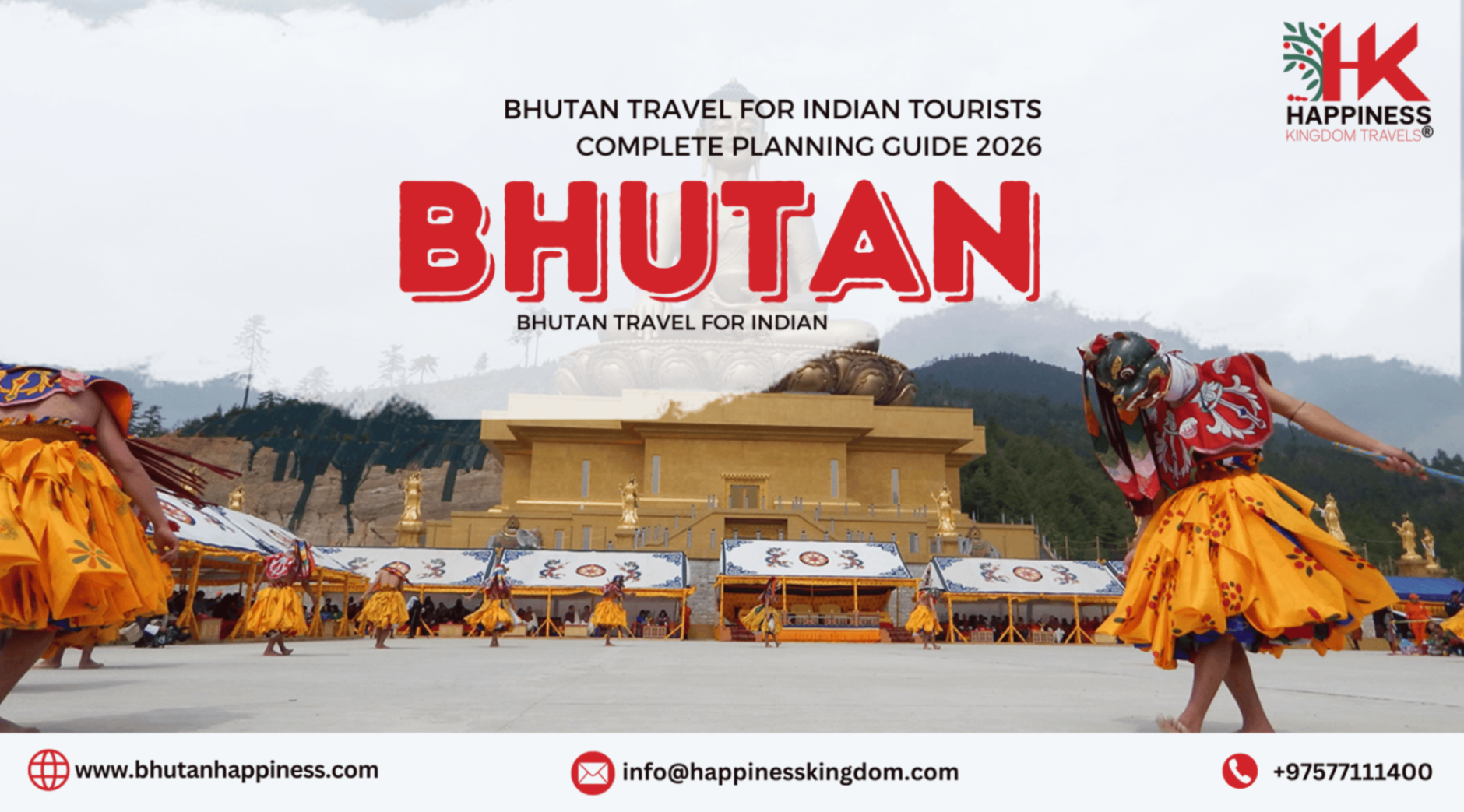
Bhutan Travel for Indian Tourists: Complete Planning Guide 2026

A small kingdom situated in the Eastern Himalayas between India and China, Bhutan is a place where misty mountains are in harmony with ancient monasteries and prayer flags are constantly moved by the wind. Known as the Land of the Thunder Dragon, this peaceful kingdom continues to lure Indian tourists into the quiet, rich, and unspoiled natural beauty.

This Bhutan Travel for Indian guide serves as your complete manual for planning a purposeful trip in 2026. Let’s read in detail from entry permits and travel expenses to the top destinations, festivals, and even small hints that will make your trip unforgettable.

Why Visit Bhutan in 2026?

Bhutan is one of the most exclusive and responsible travel spots in Asia. It is contrasted with the busy tourist spots, where the environment and culture of the country are being preserved in every single trip. “High Value, Low Impact” policy by Bhutan is still ensuring the same, allowing the tourists to see its allure without the worry of their presence disrupting the delicate ecosystems. 

For Indian tourists, it’s the perfect opportunity to reconnect with simplicity, serenity, and spirituality. Whether you are after the sunrise above the Himalayas, trekking to the mythical Tiger’s Nest Monastery, or enjoying a mug of butter tea with a monk in the village, Bhutan is going to give you a travel experience that is totally different from what you have had.

Visa and Entry Requirements for Indians 

Traveling to Bhutan for Indian citizens is very easy and simple:

  • No visa is required for Indian citizens.
  • If you have a passport that is valid for at least six months or a voter ID card issued by the Indian government, you can use it.
  • A permit has to be issued to Indians. The e-permit portal of Bhutan can be used to get the permit online, or one of the entry points can be visited to get it done, e.g., Phuentsholing, Paro, Gelephu, etc.
  • Sustainable Development Fee (SDF): Starting from 2026, the amount that Indian nationals will have to pay is ₹1,200 per adult per night and ₹600 per child (ages 6-12). Kids below the age of 5 are free of charge.
    (Source: Department of Tourism, Royal Government of Bhutan – Official 2025 Update)

Best Time to Visit Bhutan

The perfect seasons rely on the type of experience you want:

  • Spring (March–May): The valleys are vibrant with the colors and fragrances of rhododendrons and blue poppies, along with the clear sky. It is the best time for trekking and taking pictures.
  • Autumn (September–November): The season with the most visitors because of comfortable weather, colorful scenery, and major events such as Paro Tsechu.
  • Winter (December–February): It is cold but peaceful. You can go to Phobjikha Valley for black-necked crane sightings and enjoy fewer tourists.
  • Monsoon (June–August): Lush greenery but frequent rain; it is better not to visit unless you are a fan of the misty mountain vistas.

Top Experiences for Indian Travelers

Bhutan is a country where people can experience the merging of culture, nature, and spirituality most comprehensively. The following list shows the most important events of the year 2026:

  1.  Tiger’s Nest (Paro Taktsang) trek: An uphill trek that is very gratifying takes you through pine forests to a monastery on the cliff that seems to be in the clouds.
  2.  Punakha Dzong: The “Palace of Great Happiness,” as it is referred to, is a 17th-century fortress that is not only magnificent but also strategically located at the junction of two rivers.
  3.  Thimphu Tour: Bhutan’s capital is a mix of the traditional and the modern — from the imperious Buddha Dordenma to the lively Clock Tower Square.
  4.  Phobjikha Valley: An unspoiled glacier basin that is home to the black-necked cranes and is dotted with vast meadows, known for its tranquility.
  5.  Go to a Festival: The Paro Tsechu, Jambay Lhakhang Drup, or Haa Summer Festival are some of the occasions where the colorful side of Bhutanese culture is at its best.

7-Day Suggested Bhutan Itinerary for Indians

Day 1: Land in Thimphu. Spend some time at Buddha Dordenma and Tashichho Dzong. Check out the Centenary Farmers Market.

Day 2: See the National Institute for Zorig Chusum and Folk Heritage Museum. Then, in the evening, head for Punakha.

Day 3: Visit the Chimi Lhakhang (Fertility Temple) and Punakha Dzong. Get across the famous Suspension Bridge.

Day 4: Travel to Phobjikha Valley. See the Gangtey Monastery and participate in the Nature Trail hike.

Day 5: Go to Paro. Visit Dochula Pass for the stunning views of the Himalayas. Go to Ta Dzong (National Museum).

Day 6: Climb up to Tiger’s Nest Monastery. Shop for some local handicrafts and textiles in Paro.

Day 7: Visit Rinpung Dzong before your departure. Chill in your retreat or treat yourself to a local Bhutanese meal.

Average Cost of Bhutan Travel for Indian Tourists (2026 Estimate)

Expense CategoryAverage Cost (INR)Notes
SDF (Sustainable Development Fee)₹1,200/night (adult), ₹600 (child)Paid to the Bhutan government
Accommodation₹2,000–₹8,000 per nightBudget to mid-range hotels
Meals₹200–₹1,500 per mealLocal restaurants are affordable
Transport (private vehicle)₹3,000–₹5,000/dayPublic transport is limited
Entry Fees & Permits₹300–₹500 per siteDzongs, museums, and parks
Total (6–7 Days)₹35,000–₹70,000Depending on comfort level

(Source: Bhutan Tourism Council & verified travel aggregators, 2025)

Currency and Connectivity Tips

  • Currency: The Bhutanese Ngultrum (BTN) is fixed to the Indian Rupee (INR 1 = BTN 1). The Indian banknotes of ₹100 and ₹500 are extensively accepted.
  • Connectivity: Almost all Indian SIM cards (Airtel and Jio, etc.) can be used with international roaming. Nevertheless, if you stay for a long time, then get a local TashiCell SIM as it has the best coverage.
  • Payments: Digital payments will be accepted in numerous locations these days, yet having cash is still a good idea, especially in the countryside.

Essential Travel Etiquette

  • In monasteries and dzongs, dressing modestly is mandatory. 
  • Please take off your shoes before coming into the temples.
  • Do not indulge in public displays of affection. 
  • Monks and locals are to be ratified before their photographs are taken. 
  • Littering is not allowed; Bhutan takes pride in its zero-carbon policy.

(Bhutan ranked among the world’s top carbon-negative countries in the UNEP Report 2024.)

Adventure & Offbeat Experiences

If you wish to explore beyond the usual route:

  • Hike the Druk Path Trek: A five-day journey through the most beautiful lakes and meadows connecting Paro with Thimphu.
  • Practice Archery: The national sport of Bhutan is played with great zeal.
  • Go to Khoma Village: Best known for the production of Kishuthara, a fabric worn even by the royal family of Bhutan.
  • Enjoy Hot Stone Bath in Paro: A local treatment that rejuvenates and is done the traditional way.

Travel Tips for a Seamless Journey

  • Dress in layers— the weather in Bhutan changes very frequently. 
  • Your travel kit should include sunscreen, sunglasses, and a raincoat.
  • Have a copy of your identification and permits ready at all times.
  • It is forbidden to use drones or to take photos of military areas without prior consent.
  • Be respectful of the local customs because the Bhutanese are very protective of their culture and very strict when it comes to any violations.

Book Your Bhutan Trip Soon

Bhutan is not simply a tourist spot; it is a spiritual journey. It is the place where everything slows down and souls are touched.  With the best Bhutan tour operators, Bhutan Travel for Indian tourists in 2026 comprises a fabulous combination of spectacular trekking and quiet monasteries amidst total peace and an opportunity for self-discovery.

Happiness Travel Kingdom caters to Indian tourists with unforgettable Bhutan trips. Our every Bhutan itinerary is extremely well thought out, rich in culture, and absolutely trouble-free. No matter if it is your first time or a second or more in the kingdom of happiness, we make sure that every single second is no less than magical.

Experience your Life’s best Travel with us.  Make up your mind to go to Bhutan with us now!

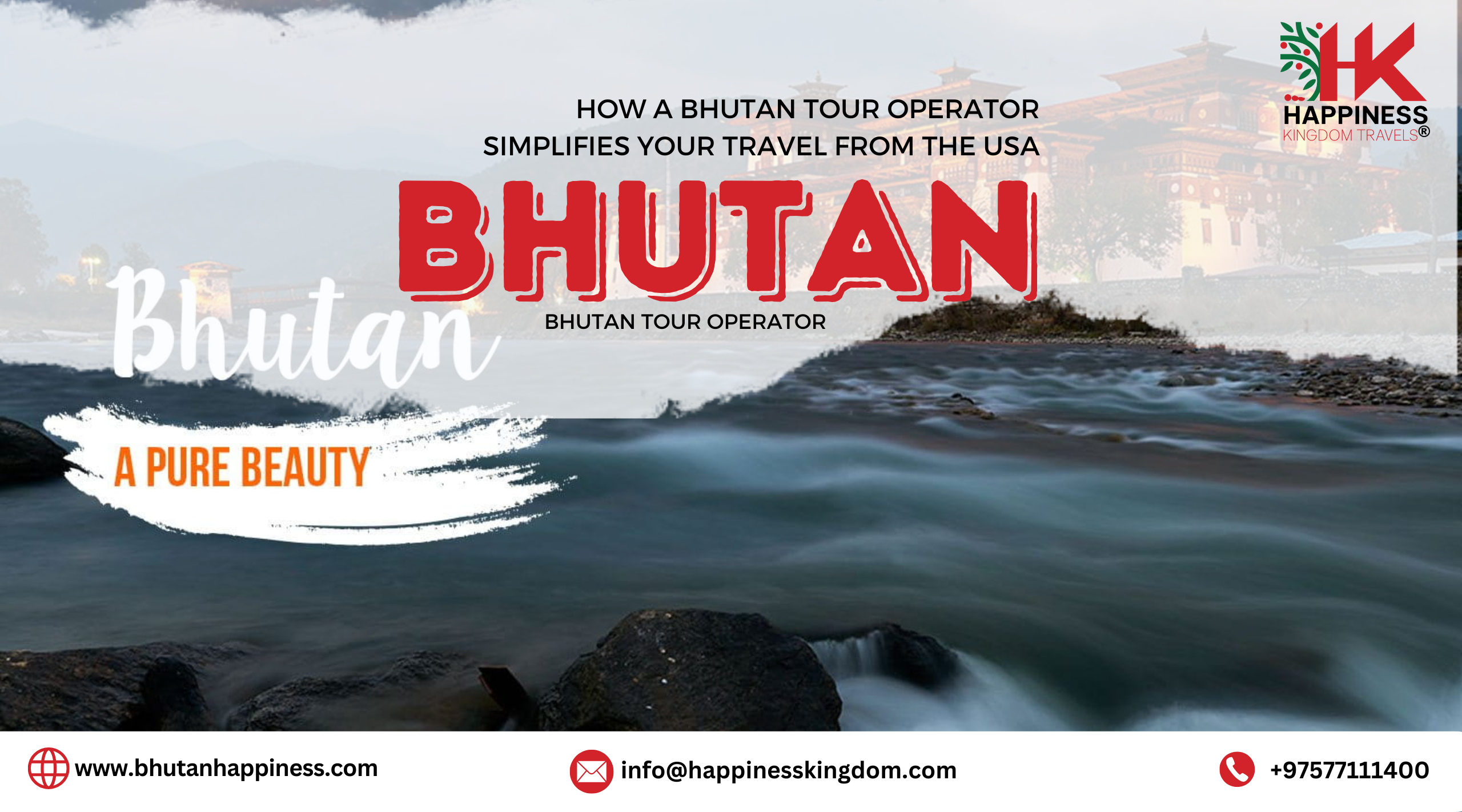
Best bhutan tour operator usa travel guide

Bhutan is one of the world’s most magical destinations—snow-capped Himalayas, ancient monasteries, and a deep commitment to happiness over GDP. But if you’re in the USA and thinking about visiting Bhutan, you’ve probably realized… it’s not exactly a “book it and go” destination.

Unlike most countries, Bhutan has unique travel rules. You can’t just hop on Expedia, book a hotel, and show up at the airport. And that’s exactly why working with the best Bhutan tour operator makes all the difference.

In this post, we’ll show you how a licensed Bhutan tour operator (like us!) simplifies every step of your journey—from visa approval to trekking plans—and makes your travel from the USA stress-free, exciting, and unforgettable.

1. Why You Can’t Travel to Bhutan Independently

Let’s start with a quick reality check: Bhutan doesn’t allow independent travel for international tourists (unless you’re from India, Bangladesh, or the Maldives).

Instead, the country follows a “High-Value, Low-Volume” tourism model. That means:

  • You must book through a licensed Bhutanese tour operator
  • All trips must include a government-approved guide
  • A visa is only issued after a confirmed tour package is booked

🎯 Bottom line: If you’re a U.S. citizen, you can’t enter Bhutan without working with an official tour operator.

2. Booking Flights from the USA to Bhutan – We Make It Easy

Bhutan has just one international airport—Paro Airport, and only a few airlines fly there.

Here’s how a typical route from the U.S. looks:

  • ✈️ Fly from New York, LAX, or another U.S. hub to Bangkok, Delhi, or Kathmandu
  • ✈️ Take a connecting flight to Bhutan on Druk Air or Bhutan Airlines 

Sounds complicated? Don’t worry.

At Happiness Kingdom Travels, we:

  • Help you coordinate international and connecting flights
  • Arrange airport pickups, accommodation for layovers, and ensure smooth transfers
  • Track flight delays and adjust your Bhutan tour accordingly 

📊 Pro Tip: Over 70% of our U.S. clients connect through Bangkok due to better flight options and less visa hassle.

3. Visa Application and SDF Fee? We’ve Got It Covered

Getting a Bhutan visa as a U.S. traveler isn’t a DIY task—it has to be submitted by your Bhutan tour operator.

What we handle for you:

  • Submitting your visa application to Bhutan’s Department of Immigration 
  • Paying the SDF (Sustainable Development Fee) on your behalf 
  • Sending you the visa clearance letter (needed to board your flight to Paro) 

💡 The SDF is $100 per person per day and supports Bhutan’s healthcare, education, and sustainability efforts.

4. Personalized Itineraries Based on Your Travel Style

Bhutan is not a place for generic travel plans. Your trip should reflect your interests, whether that’s:

  • 🧘‍♀️ Wellness and meditation retreats 
  • 🏔️ Adventure and high-altitude trekking 
  • 🎭 Cultural exploration during Tshechu festivals 
  • 📷 Photography, birding, or off-the-grid eco-tours 

As the best Bhutan tour operator for U.S. travelers, we work with you to design a custom itinerary that fits your timeline, comfort level, and goals.

5. Everything’s Pre-Arranged: Hotels, Meals, Guides & Permits

When you book with Happiness Kingdom Travels, your Bhutan trip includes:

  • ✨ Hotel reservations (3-star to luxury – your choice) 
  • 🍛 All meals (with dietary needs considered) 
  • 🚗 Private transport with driver 
  • 🧭 Certified English-speaking guide 
  • 🎟️ Entry tickets and permits for attractions and trekking routes 

No surprise costs. No worrying about logistics. Just show up and enjoy.

6. Permits and Trek Logistics? Done and Done.

Want to hike the Druk Path Trek or the Jomolhari Loop? Certain routes require special permits, which can only be secured by local tour operators.

We handle:

  • Government-approved trekking permits 
  • Support crew, gear, tents, and food for multi-day treks 
  • Emergency evacuation plans and travel insurance guidance 

🧗‍♂️ Bhutan’s trails can go above 13,000 ft, so it pays to have a local team that knows the terrain—and your safety needs.

7. Cultural Guidance and Local Insight

What truly elevates your Bhutan trip is the cultural connection—and that’s something only a local guide can provide.

With our guides, you’ll:

  • Learn the meaning behind each temple ritual
  • Know when (and how) to make a prayer offering
  • Understand Bhutan’s unique approach to Gross National Happiness
  • Get access to local events and village life that tourists rarely see 

8. Post-COVID Travel Support

Still worried about pandemic rules, flight changes, or travel insurance?

We help you:

  • Stay updated on entry requirements 
  • Choose COVID-19 travel insurance that works internationally 
  • Understand refund/rescheduling options if plans change 

✅ Peace of mind is part of the package.

9. Why U.S. Travelers Prefer Booking with a Bhutan-Based Operator

Working with an official Bhutan tour operator gives you:

  • Local expertise you won’t get from international resellers 
  • Better prices (no unnecessary middlemen) 
  • Direct support in Bhutan if anything goes wrong 
  • The confidence of working with a team approved by the Tourism Council of Bhutan 

10. How to Choose the Best Bhutan Tour Operator

Not all operators are equal. Here’s what to look for:

✅ Government license (ask for proof)
✅ Strong reviews from U.S. travelers
✅ Quick, clear communication in English
✅ Customization options—not one-size-fits-all
✅ Transparent pricing with no hidden fees

💬 At Happiness Kingdom Travels, we’re proud to tick all those boxes—and more.

🙋‍♀️ FAQs – Bhutan Travel from the USA

Q1. Can I book just a hotel and fly to Bhutan on my own?
No. All U.S. travelers must book a complete tour package with a licensed Bhutan tour operator.

Q2. Is it safe to travel to Bhutan solo?
Yes! Bhutan is one of the safest countries in Asia, and our guides are with you every step of the way.

Q3. How far in advance should I plan?
We recommend booking 3–6 months in advance, especially if you’re visiting during festival season.

Q4. What’s the minimum trip duration?
You can book as few as 4–5 days, but most travelers from the USA stay 7–10 days to make the long flight worth it.

Final Thoughts

Planning a trip to Bhutan from the USA might sound complex—but it doesn’t have to be.
With the best Bhutan tour operator by your side, it becomes a seamless, enriching, and life-changing journey.

At Happiness Kingdom Travels, we take care of the details—so you can focus on the experience.

👉 Let’s simplify your Bhutan adventure.
Reach out today to start planning a trip that’s 100% yours.

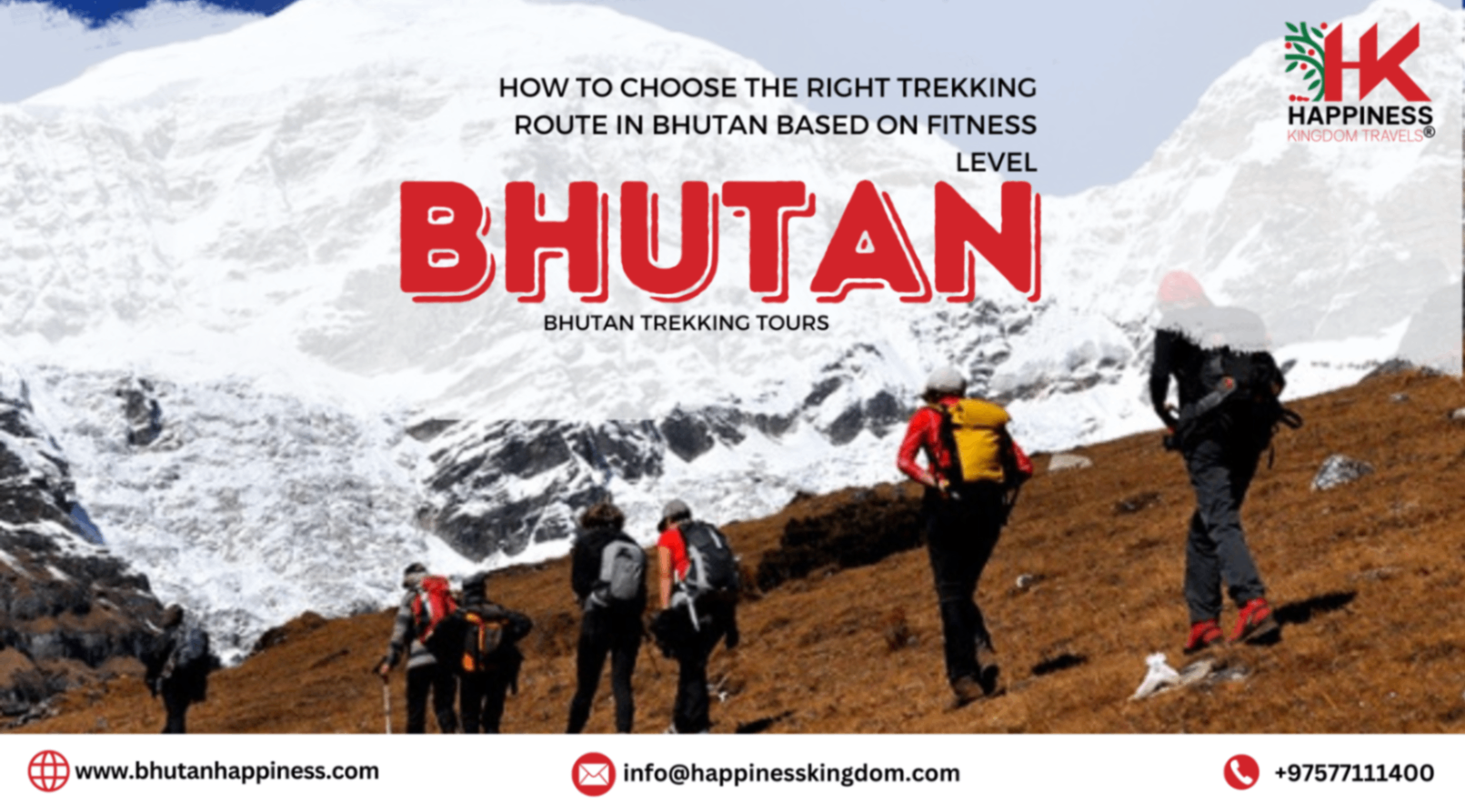
Choose right bhutan trek by fitness level

So, you’re ready to trek through Bhutan? First off—great choice! Bhutan isn’t just about stunning mountain views (though it has plenty of those). It’s about peace, culture, and adventure, all wrapped into one unforgettable journey.

But let’s be real—trekking in Bhutan isn’t one-size-fits-all. The best Bhutan trekking tours vary widely in terms of difficulty, duration, and elevation. Whether you’re a weekend walker or a seasoned hiker, choosing a trek that matches your fitness level is the key to enjoying every step.

In this guide, we’ll help you pick the right trekking route in Bhutan—so you’re not just keeping up, but fully soaking it all in.

1. What Makes Trekking in Bhutan Unique?

Bhutan isn’t your average trekking destination. With trails running through ancient monasteries, forests, and alpine meadows, every hike feels sacred. Plus, the country’s “high-value, low-impact” tourism model means you won’t be competing with crowds.

🌄 Elevation Alert: Most Bhutan treks range from 8,000 ft to 16,000 ft, so your fitness level and altitude tolerance both matter!

2. Assessing Your Fitness Level

Before you hit the trail, ask yourself:

  • Can I walk 6–8 miles a day on uneven ground? 
  • Have I done hikes with 1,000+ ft of elevation gain? 
  • Am I comfortable carrying a small daypack for hours? 

Be honest—this helps us match you with a route you’ll enjoy, not just survive.

3. Easy Trekking Routes in Bhutan (Beginner Level)

Ideal for: First-time trekkers, families, older travelers, or those easing into hiking

Characteristics:

  • Shorter durations (1–4 days) 
  • Lower elevations (below 10,000 ft) 
  • Well-defined, gentle trails 

✅ Recommended Treks:

➤ Gangtey Nature Trail (1 day)

  • Scenic walk through Phobjikha Valley 
  • Suitable for all ages 
  • Great for birdwatching and cultural stops 

➤ Bumthang Cultural Trek (3–4 days)

  • Soft adventure combined with monastery visits 
  • Lower altitude, cultural immersion 

➤ Sagala Trek (1–2 days)

  • Forested trail with views of Mt. Jomolhari 
  • Ideal warm-up for future trekking trips 

🧘‍♀️ These are perfect if you’re looking for a mix of nature, culture, and relaxation.

4. Moderate Trekking Routes in Bhutan (Intermediate Level)

Ideal for: Travelers with some hiking experience and average fitness

Characteristics:

  • 5–7 days long 
  • Altitudes between 10,000 and 13,000 ft 
  • Moderate ascents and descents 

✅ Recommended Treks:

➤ Druk Path Trek (5–6 days)

  • One of the most popular treks in Bhutan 
  • Connects Paro and Thimphu 
  • Offers clear views of Mt. Gangkar Puensum and alpine lakes 

➤ Dagala Thousand Lakes Trek (6 days)

  • Known for pristine lakes and remote campsites 
  • More solitude, fewer trekkers 

➤ Phobjikha Valley Trek (2–3 days)

  • Great for acclimatization 
  • Combines hiking with cultural discovery 

📈 Fact: According to the Bhutan Tourism Council, the Druk Path Trek is the most booked moderate trek by foreign travelers.

5. Challenging Trekking Routes in Bhutan (Advanced Level)

Ideal for: Experienced hikers, adventure seekers, and those comfortable at high altitude

Characteristics:

  • 8+ days 
  • Steep climbs, high passes over 14,000 ft 
  • Requires prior hiking or altitude experience 

✅ Recommended Treks:

➤ Jomolhari Trek (8–10 days)

  • Jaw-dropping views of Mt. Jomolhari 
  • Steady climbs and remote valleys 
  • Camping required 

➤ Laya Gasa Trek (12–14 days)

  • More remote and culturally immersive 
  • Passes through nomadic villages 

➤ Snowman Trek (20–25 days)

  • Considered one of the toughest treks in the world 
  • Crosses 11 high passes 
  • Requires high-level endurance and logistics 

⚠️ Advanced treks require training and strong cardiovascular fitness. We provide pre-trip support to help you prepare.

6. How to Train for Your Bhutan Trek

Beginner:

  • Start walking 3–5 times a week 
  • Include light incline and stairs 
  • Break in your hiking shoes early! 

Intermediate:

  • Add pack weight (10–15 lbs) 
  • Train on hilly terrain 
  • Aim for 6–8 miles per session 

Advanced:

  • Hike on consecutive days 
  • Combine cardio + strength 
  • Include altitude training if possible (Colorado, Sierra Nevadas, etc.)

7. When to Trek in Bhutan (Season Matters!)

⛰️ Spring (March–May):

  • Lush greenery, blooming rhododendrons 
  • Best for all trekking levels 

🍂 Fall (September–November):

  • Clear skies, excellent visibility 
  • Ideal for moderate and advanced treks 

☀️ Summer (June–August):

  • Rainy season—stick to cultural or lower altitude trails 

❄️ Winter (December–February):

  • Cold and snowy—only short, low-altitude hikes recommended

8. Why Work with a Licensed Bhutan Tour Operator?

Since independent travel isn’t allowed in Bhutan, U.S. travelers must book through a licensed operator.

At Happiness Kingdom Travels, we:

  • Customize treks based on your fitness level 
  • Provide licensed guides trained in first aid and altitude response 
  • Take care of permits, gear logistics, and pre-trek training advice 
  • Offer the best Bhutan trekking tours with flexible plans

🙋 FAQ – Trekking in Bhutan by Fitness Level

Q1. I’ve never trekked before—can I still visit Bhutan?

Yes! We offer easy treks and walking tours that let you explore Bhutan without strenuous hikes.

Q2. Will I get altitude sickness?

Most treks are designed for gradual acclimatization, but we provide guidelines to help minimize risk.

Q3. Can I combine trekking with cultural sightseeing?

Absolutely. We specialize in hybrid itineraries that balance hiking with monastery visits, festivals, and more.

Q4. Is gear provided?

You’ll need to bring personal essentials (boots, jackets), but we provide tents, food, and support crew on longer treks.

Final Thoughts

Choosing the right trek in Bhutan isn’t about pushing your limits—it’s about maximizing your joy and connection with nature and culture.

Whether you’re a beginner looking for peaceful valley walks or an experienced trekker craving high-altitude challenges, Bhutan has the trail for you. And Happiness Kingdom Travels is here to guide you every step of the way.

👉 Ready to hike into happiness?
Let’s plan your perfect trekking experience with the best Bhutan trekking tours, tailored just for you.

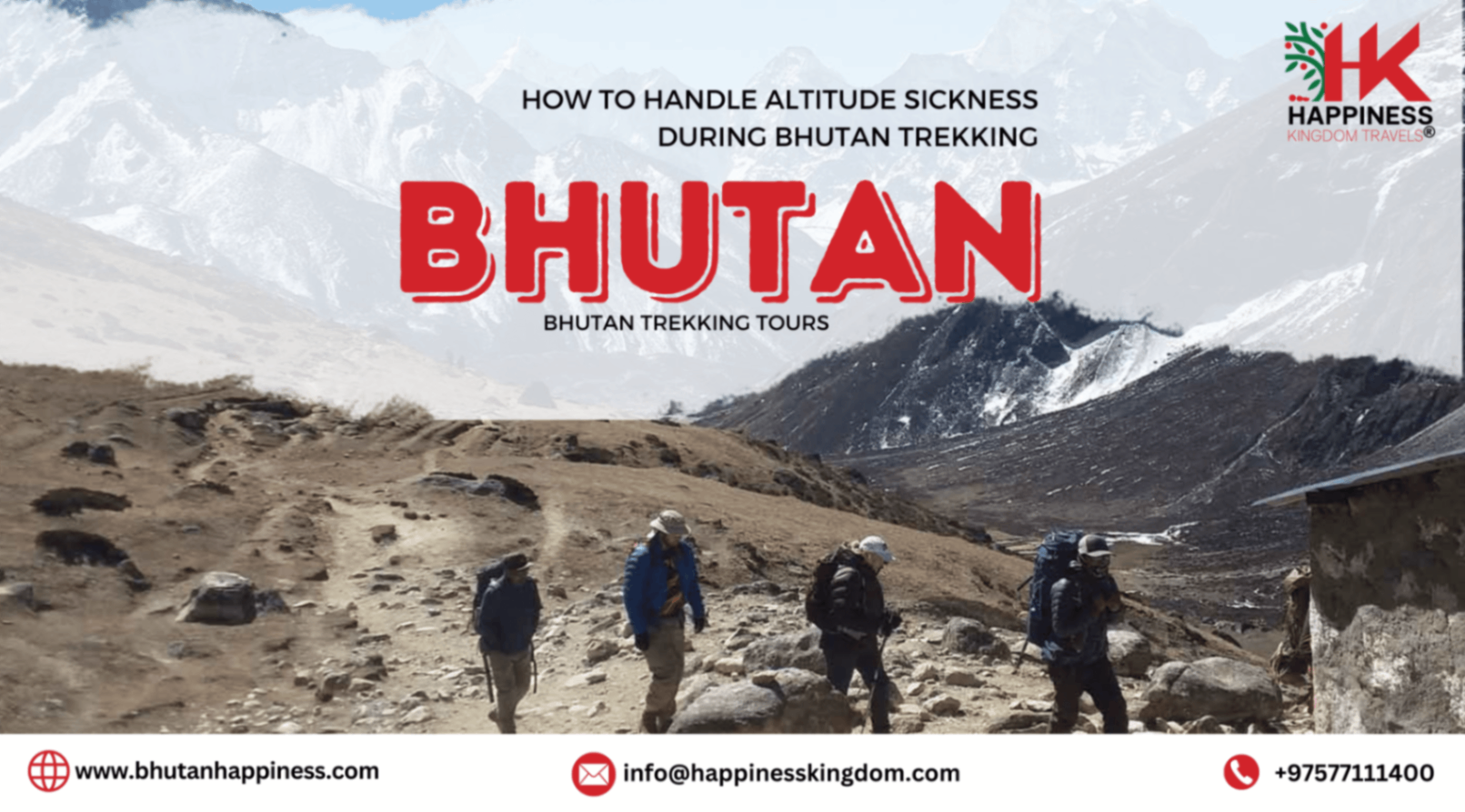
How to Handle Altitude Sickness During Bhutan Trekking

Trekking to Bhutan’s Himalayan ranges is no less than a dream adventure. A trek offers a great variety of landscapes plus spiritual temples located near the valleys, it offers stunning beauty and real altitude. At an altitude of over 2,500–3,000 meters, the chance of suffering from Acute Mountain Sickness (AMS) soars. 

Knowing the ways of preventing, recognizing, and treating AMS is important for a safe and pleasant Bhutan trekking tours experience. The present guide delivers you the science-based, comprehensive precautions so that you can trek smarter.

What is AMS & Why Does It Happen?

Acute Mountain Sickness (AMS) develops when the body is subjected to the higher altitudes that have lower air pressure and less oxygen. On most of the Himalayan routes in Bhutan, trekkers quickly move up to 3,500-5,500 m zones. At these elevations, the amount of oxygen in the blood decreases, breathing becomes more difficult, sleep is disturbed, and in extreme cases, fluids can gather in the brain (cerebral edema) or lungs (pulmonary edema). The symptoms of AMS usually start after 6-12 hours of an increase in altitude.

Key Prevention Strategies

  • Ascend Gradually (“Walk high, sleep low”)

The trekking itinerary should be planned in such a way that the daily increase in elevation is minimal. Above ~3,000 m, aim for no more than ~300-500 m gain per day, and take a day off after every 2-3 days of ascension. If it is feasible, sleep at a lower altitude.

  • Hydration and Nutrition

You should drink more water than your estimate, as a dehydrated condition simulates or worsens AMS. To support metabolism under low oxygen conditions, eat a high-carbohydrate diet. It is best to avoid alcohol, sedatives, and caffeine during the ascent as they hinder the acclimatization process.

  • Rest and Avoid Overexertion

Maintain a slow and easy pace. If you are really out of breath or if you cannot talk, then it is time to slow down. Early rest days (no strenuous hike) help your body adjust. Sufficient sleep is crucial: poor sleep hinders recovery.

  • Use of Prophylactic Medication (Diamox / Acetazolamide)

For many trekkers throughout Bhutan trekking tours, especially those rapidly climbing or reaching altitudes of approximately ~3,500-4,000 meters, acetazolamide (Diamox) is the standard preventive medication.

The typical prophylactic dosage is 125mg twice daily (morning + evening) starting 24 – 48 hours before the climb and continuing for the first 2 – 3 days at the higher altitude.

In certain instances, the dosage may be escalated to 250 mg twice daily under a doctor’s supervision. Please note: this is a prescription drug—consult your physician, particularly if you have a sulfa allergy or have kidney or liver problems.

  • Watch for Symptoms using Standard Tools

The Lake Louise Score can be used to evaluate AMS: headache is mandatory along with different symptoms (nausea, dizziness/lightheadedness, fatigue/weakness, sleep disturbance). A cumulative score of 3 or more indicates AMS.

If you possess a pulse oximeter, regularly check your oxygen saturation (if you have one). Guides on numerous high-altitude treks in the Himalayas use them daily.

Practical Tips for Bhutan Trekkers

  • Take Diamox one day before and during the hike to high altitude areas (above ~3,500 m). Do not think that you can manage by first noticing the symptoms.
  • The visiting schedules in Bhutan should consist of resting days, particularly when passes are crossed or when high camps are reached.
  • Going down to a bit lower altitude is very beneficial. Do not just continue walking to the next high camp when you feel sick.
  • Bring with you the basic medicines: Diamox, nausea preventatives (if prescribed), pain relievers for headache—but these are not substitutes for going down, they are supplements.
  • If possible, use a pulse oximeter; it provides objective data.
  • Nights are the most dangerous times: pulmonary oedema sometimes gets worse during sleep. 

Among the measures that help are sleeping in a warm and dry environment, using a tight sleeping bag, and not overheating.

When to Get Help / Descend

Descending should be done immediately if any of these conditions arise:

  • Mental confusion or the inability to walk properly (HACE signs).
  • Very difficult breathing even when not exerting, particularly if there is also chest tightness or if lips/fingers are turning purple (HAPE).
  • Oxygen saturation level goes down to around 80% or less and does not get any better with rest or oxygen (if available).
  • Any sign that is so intense that you cannot take in food, fluids, or sleep.

Conclusion

Altitude sickness is not only a possibility but it’s a risk throughout the Bhutan trekking tours, and every trekker should be ready for it. If one follows the proper measures, gradual ascent, plenty of fluids, good sleep, preventive Diamox when indicated, and careful checking, one will reduce the risk and have more fun. 

Happiness Kingdom Travel ensures that you are always safe and your happiness is the center of the trails throughout the journeys. We make a trek tour package that matches your speed, health, and Himalayan heights. Do not worry; we will make your Bhutan trip memorable and secure. 

Explore our Trekking tours to Bhutan on our website.

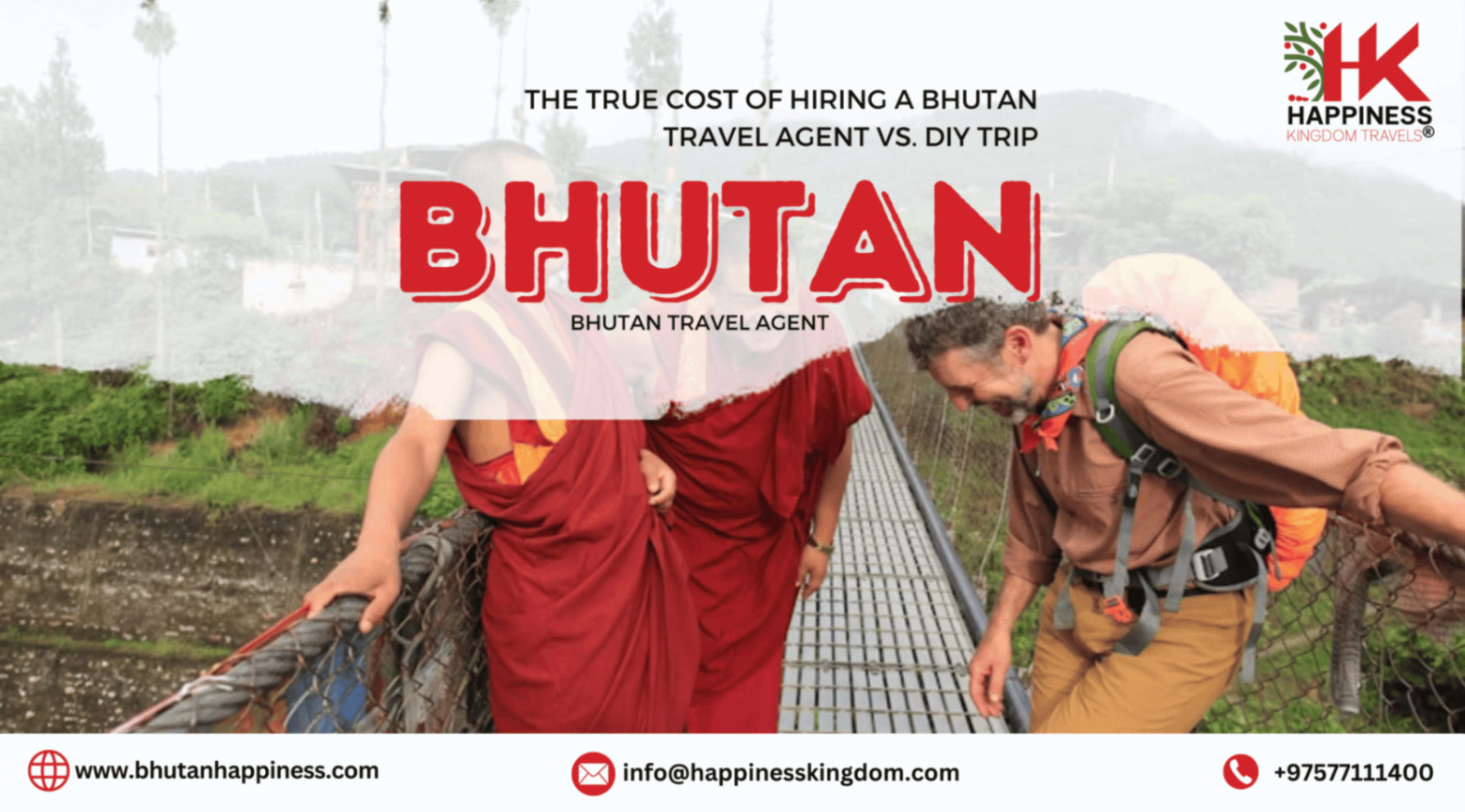
The True Cost of Hiring a Bhutan Travel Agent vs. DIY Trip

For many travelers, Bhutan is at the top of the bucket list. Among its stunning monastic sites, untouched natural parks, and the Gross National Happiness policy, Bhutan has a captivating charm that no other destination can compete with. 

However, the trip planning always leads to the question of whether one should go with an independent journey planning or choose a leading Bhutan travel agent for the travel experience.  

Since the country reinitiated tourism with updated policies in September 2022, it allows independent travel in principle but with some restrictions. Even though the citizens of India, Bangladesh, and the Maldives can travel more easily, most inbound tourists need to cope with the process of getting a visa, arranging regional permits, and paying the Sustainable Development Fee (SDF). 

 Whether you’re seeking flexibility or convenience, understanding the real cost, this guide will help you decide wisely.

Bhutan’s Controlled Tourism Model

Unlike many other destinations that go for mass tourism, Bhutan takes the “High Value, Low Volume” route. Every visitor pays the Sustainable Development Fee (SDF) of US $100 per person, per night for foreigners, and contributes to sustainable tourism at the same time.

The SDF supports the environment, infrastructure, and culture of Bhutan. When you opt for a leading Bhutan travel agent, the fee is included, and it is handled transparently together with your visa processing and itinerary design. For the independent traveler, this stage gets more complicated as it requires submitting forms, coordinating payments online, and sometimes solving issues with portals that may not be user-friendly for beginners.

Cost Breakdown: Travel Agent vs. Independent Travel

In order to make a realistic comparison of the two options, one must consider not only the price but also the value of the services provided for the price.

Expense TypeDIY TripThrough Leading Bhutan Travel Agent
Visa & PermitsUS $40 visa fee + manual SDF payment + region-specific permitsIncluded, handled by the agent
AccommodationNeed to book via local hotels (limited online presence)Curated partner hotels vetted for quality
TransportationLimited public transport; car rental can exceed US $120/dayPrivate vehicle + licensed driver included
GuidesMandatory for cultural sites; hiring separately costs US $25–50/dayProfessional guide included
Meals & LogisticsSelf-managedPre-arranged and prepaid
Hidden CostsPossible due to currency exchange, overcharging, or poor coordinationTransparent all-inclusive pricing

The “do-it-yourself” travel route may appear to be cheaper initially when all the costs are summed up. But once you add separate guide fees, local transport, and hotel markups, the final figure is often equal to or even more than the all-inclusive package offered by a leading Bhutan travel agent you have selected. 

Permit & Regulation Complexities for DIY Travelers

Independent tourists have to acquire permits for accessing districts, monasteries, and trekking zones in the country, like Bumthang, Haa Valley, and the Jomolhari Trail. The processed permits must be issued by the Department of Immigration or licensed agencies. For solo travelers, each permit can take about three or four working days to be processed and, in some cases, requires a personal appearance after arrival in Thimphu.

However, bargaining methods of travel agents and permits can be easily secured through the tourist agencies before your departure, hence cutting down both time and therefore killing the stress. Above all, they also keep track of local regulations and storm-related restrictions so that your travel plans are not disturbed.

Value of Professional Guidance

Collaboration with a leading Bhutan travel agent from travel agencies like Happiness Kingdom travels offers valuable service with local expertise. Licensed guides do not just speak the local language; they describe to you Bhutan’s rich symbolism, spiritual rituals, and regional customs that are often inaccessible to unaccompanied travelers.

Travel agents will arrange for audience visits at monastic schools, recommend authentic local eateries, etc., and most importantly, you will not miss cultural nuances that define the Bhutanese experience. In a country where every dzong, chorten, and mountain pass holds deep spiritual significance, professional guidance becomes a priceless asset.

The Hidden Risks of Choosing a DIY Trip

  • Unpredictable Transportation: Bhutan’s mountain roads are very beautiful, but at the same time very challenging. The public buses are not frequent, and taxis might be expensive and unreliable for long-distance travelling.
  • Accommodation Limitations: Most rural hotels are not represented on world booking sites, so it is almost impossible to plan without local people. The advance planning will be hard without a local travel agent involved.
  • Language Barriers: English is quite common in urban areas, but in isolated valleys, one person may have to interpret for another.
  • Permit Delays: Without having local representation, getting trekking or photography permits can halt your schedule unexpectedly.
  • Safety and Connectivity: In the highlands, the cellular and internet coverage is not very good, so self-navigation will be more difficult.

The independent way of traveling grants you flexibility, but at the same time, places logistical, financial, and safety concerns all on you.

The Verdict

If you’re a first-time traveler to Bhutan, hiring a leading Bhutan travel agent is always the better, safer, and more rewarding option. The unique tourism policies of the country, its geographical difficulties, and deep-rooted traditions make professional coordination invaluable. Tourists no longer need to worry about the hassles of permits and uncertain logistics; instead, they can directly feel the soul of Bhutan.

Plan with Happiness Kingdom Travels

Your right partner choice will make the travel from stressful to relaxing. Happiness Kingdom Travels is the best Bhutan travel agency if you want to spend the best days in Bhutan. We have designed beautiful Bhutan travel packages with professional tour leaders and offer transparent prices.

 Let the Bhutan of your dreams reveal itself to you with Happiness Kingdom Travels, where each second is a step to happiness.

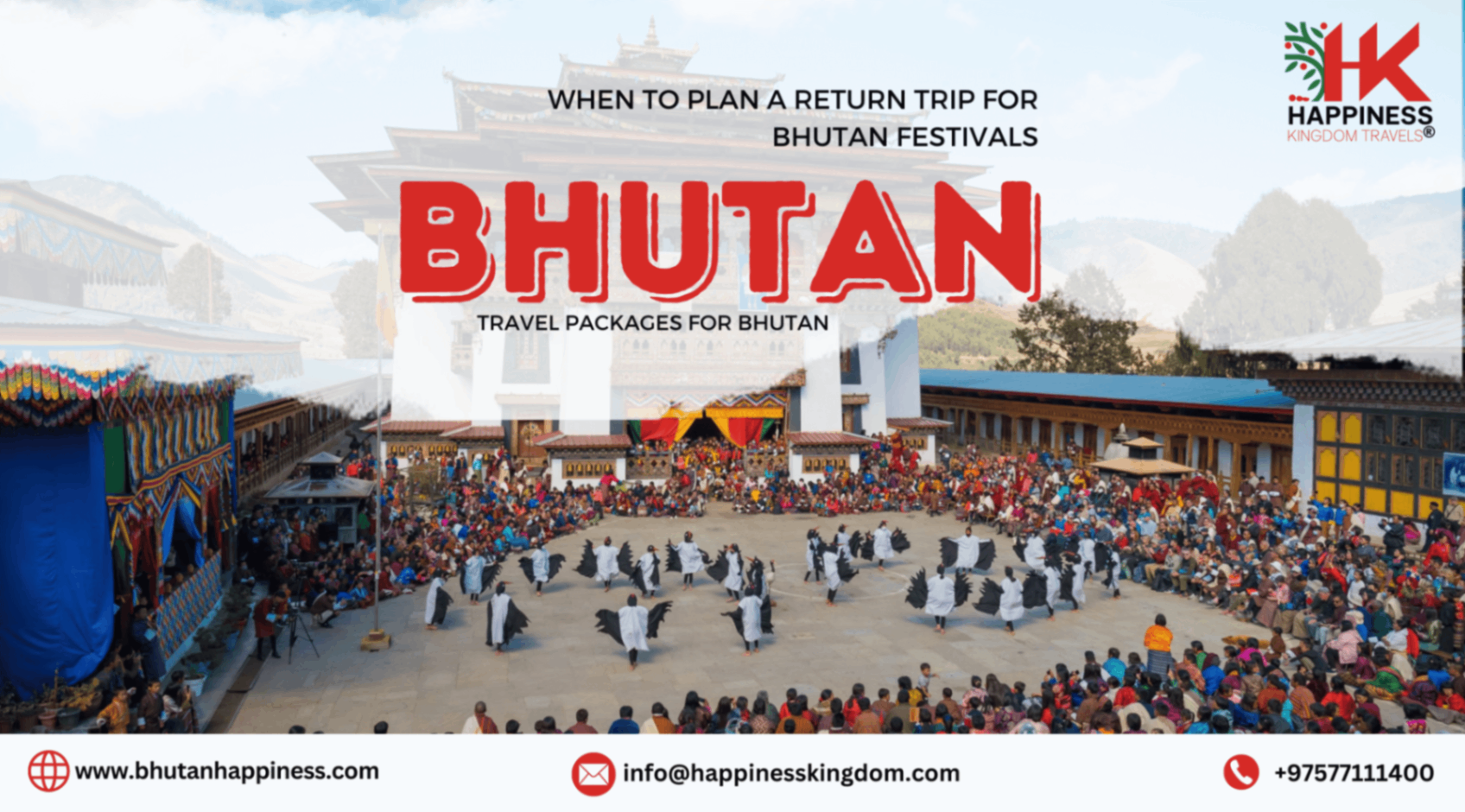
When to Plan a Return Trip for Bhutan Festivals

If you’ve already visited Bhutan once, chances are—you’re hooked. The stunning mountain scenery, warm hospitality, and peaceful energy make it a place that just sticks with you. But if you’re wondering what’s next, we’ve got an answer: come back for the festivals.

Experiencing a Bhutanese festival, or Tshechu, is one of the most unique cultural journeys you can take. And even if you’ve been to Bhutan before, visiting during one of these vibrant events offers a completely new lens on the country.

In this blog, we’ll help you figure out exactly when to plan your return trip and which festivals are worth timing your next adventure around.

Why Bhutan Festivals Are Worth a Second (or Third!) Visit

Bhutanese festivals are unlike anything else in the world. Rooted in centuries-old Buddhist tradition, they’re colorful, spiritual, and completely immersive. You’ll see:

  • Mask dances performed by monks

  • Blessings from high lamas

  • Locals dressed in traditional attire

  • Rituals that are both joyful and deeply sacred

For repeat visitors, these events offer an authentic way to reconnect with the heart of Bhutanese culture.

📊 Did You Know? According to the Bhutan Tourism Council, over 65% of return visitors say attending a festival made their second trip more meaningful than their first.

Understanding Bhutan’s Festival Calendar

Bhutan follows a lunar calendar, so festival dates change each year. That’s why it’s key to check the updated schedule when booking.

🗓️ General Festival Seasons:

  • Spring (March–May): Clear skies, blooming valleys, and some of the biggest festivals

  • Fall (September–November): Crisp air, harvest season, and high-energy celebrations

  • Winter (December–February): Smaller, local festivals with intimate vibes

  • Summer (June–August): Great for offbeat, community-based experiences like Haa Summer Festival

Top Festivals to Consider for Your Return Trip

Here are some of our favorite festivals—perfect for repeat travelers from the U.S.

🎭 1. Paro Tshechu (March/April)

  • Bhutan’s most famous festival

  • Held at the stunning Paro Dzong

  • Features the unveiling of a giant Thangka (scroll painting) at dawn

  • Great add-on: Hike to Tiger’s Nest during this trip

🏙️ 2. Thimphu Tshechu (September)

  • Held in the capital city, so logistics are easier

  • Larger crowds, bigger performances

  • Perfect for travelers looking for a blend of tradition + accessibility

🔥 3. Jambay Lhakhang Drup (October/November)

  • Known for its fire blessing ceremony

  • Features the mystical “naked dance” (Tercham) performed by monks

  • Held in Bumthang, a spiritual heartland of Bhutan

🐦 4. Black-Necked Crane Festival (November)

  • Combines wildlife conservation and community celebration

  • Held in Phobjikha Valley during the arrival of endangered cranes

  • Great for families, photographers, and eco-travelers

🌾 5. Haa Summer Festival (July)

  • A hidden gem—fewer tourists, more local flavor

  • Celebrates Bhutanese nomadic culture with food, crafts, and games

  • Ideal for those who’ve already done the “mainstream” Bhutan tour

How to Time Your Trip Based on Interests

Still deciding which festival is for you? Here’s a quick guide:

Traveler TypeRecommended FestivalWhy
Spiritual SeekerParo or Jambay Lhakhang TshechuDeep Buddhist rituals and blessings
Family TravelerBlack-Necked Crane FestivalKid-friendly, educational, eco-focused
Cultural EnthusiastThimphu or Paro TshechuGrand performances, cultural pageantry
Adventure LoverCombine any Tshechu with a short trekAdds variety to the experience
Offbeat ExplorerHaa Summer FestivalAuthentic and immersive local experience

Factors to Consider When Planning Your Return

Here are a few things to keep in mind as you plan:

  • Festival Crowds: Major events like Paro Tshechu book up fast—start planning 6–9 months in advance

  • Weather: Spring and fall have the best weather for trekking + festivals

  • Flights: Limited routes into Bhutan—most U.S. travelers connect via Bangkok or Delhi

  • SDF (Sustainable Development Fee): $100/day for most foreign tourists—ask your tour operator about what’s included

  • Visa: Still required for return trips—but don’t worry, Happiness Kingdom Travels handles that for you

Booking Tips for U.S. Travelers

  • Start early: Bhutan’s tourism is capped to preserve its culture, so space is limited

  • Work with a licensed operator: Like us—we’re based in Bhutan and know the calendar inside out

  • Ask for flexibility: We offer custom travel packages for Bhutan, built around the festivals you want to experience

  • Private vs. Group Tours: Private tours offer more flexibility, especially if you’re combining festivals with trekking or wellness

Cultural Etiquette During Festivals

Bhutanese people are incredibly welcoming, but festivals are sacred. Keep in mind:

  • Dress modestly: Long sleeves and pants

  • Don’t point your feet at religious items

  • Photography may be restricted during certain dances—ask first

  • Join in, but stay respectful—it’s a spiritual event, not a show

Add-On Experiences: Make the Most of Your Trip

Don’t stop at the festival. You can combine your Bhutan trip with:

  • Short Treks: Like Druk Path or Gangtey Trail

  • Meditation Retreats: Perfect for spiritual recharge

  • Cultural Workshops: Try your hand at weaving or butter sculpture

  • Cross-Border Add-Ons: Combine Bhutan with a quick visit to Nepal or India

Final Thoughts

Bhutan isn’t just a one-and-done destination. With its rotating festival calendar, distinct regions, and ever-welcoming people, each trip feels like a fresh discovery.

At Happiness Kingdom Travels, we offer curated travel packages for Bhutan tailored for returning guests who want to experience the kingdom on a deeper level.

👉 Ready for round two? Let’s plan your perfect Bhutan festival experience today.

FAQ – Planning a Return Trip for Bhutan Festivals

Q1. When should I start planning for a Bhutan festival tour?

Ideally, 6 to 9 months in advance, especially for Paro and Thimphu Tshechus.

Q2. Are festival dates fixed every year?

Not exactly. They follow a lunar calendar, so the dates shift each year. Always confirm with your tour operator.

Q3. Can I attend more than one festival in one trip?

Yes! We can help you plan multi-festival itineraries, depending on timing and region.

Q4. Are Bhutan festivals suitable for kids?

Some are! We recommend Black-Necked Crane Festival or Haa Summer Festival for family travelers.

test
EXPLORE BHUTAN LIKE NEVER BEFORE WITH HK TRAVELS
Custom Tours
Customisable
Tour Packages
Languages
12+ Languages
Fluent Guides
Certified
Govt. Certified
Tour Guides
Experience
20+ Years of
Experience
Staff
18+ Dedicated
Staff Members

PLAN YOUR TRIP TO BHUTAN

Fill in your details and we’ll get back to you with the best deals!